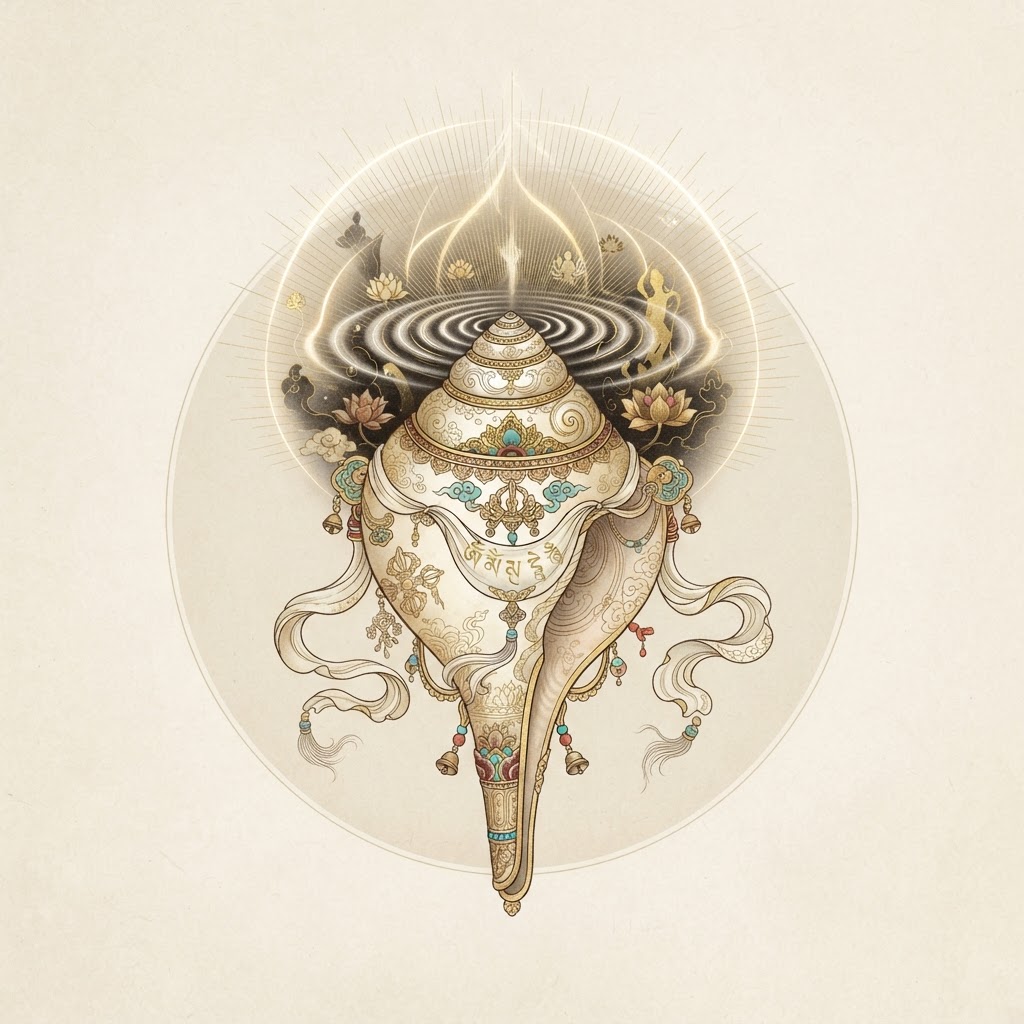
Conch Shell: Meaning, Origin & Symbolism
Also known as: Shankha, Right-Turning Conch, Dung-Dkar
Buddhist
Buddhist
Throat Chakra
Air
Truth
Clarity
Protection
Awakening
A sacred horn whose resonant blast represents the fearless proclamation of the Dharma awakening beings from ignorance.
Quick Facts
- Category
- Buddhist
- Culture / Origin
- Buddhist
- Geographic Origin
- Ancient India / Tibet
- Historical Period
- Classical Antiquity
- Estimated Age
- circa 1000 BCE
- Element
- Air
- Planet
- Mercury
- Chakra
- Throat
- Deities
- Gautama Buddha, Brahma
- Verification
- unverified
What is Conch Shell?
The sacred white conch shell, particularly one that coils clockwise or to the right (Dakshinavarta Shankha), is one of the most revered symbols in Buddhist ritual traditions. Rare in nature, the right-turning conch has been prized for millennia as a sacred object and acoustic instrument whose deep, sonorous tone penetrates vast landscapes.
In Buddhist ceremonial use, the blowing of the conch signifies the fearless, reverberating declaration of the Buddha's teachings. Just as the sound of the conch travels in all directions without resistance, the Dharma spreads across the world to pierce through spiritual slumber, dispelling negative illusions and summoning practitioners to assemble for worship and awakening.
Meaning of Conch Shell
The conch represents the proclamation and far-reaching sound of the Dharma, awakening all sentient beings from the slumber of ignorance.
Origin & History
Originally blown on Vedic battlefields as an auspicious horn of war and victory (as recounted in the Mahabharata), the conch was repurposed by early Buddhism into a spiritual horn of peace. It is said that when the Buddha attained enlightenment under the Bodhi tree, the great celestial deity Brahma presented him with a white right-coiling conch shell, urging him to proclaim the profound truth to all beings.
Spiritual Meaning
The resonance of the conch symbolizes the speech of the Buddha—flawless, melodic, and transformative. It represents awakening the inner ear to listen to divine truth, urging the individual mind to break through habituated ego states.
Symbolism
The pristine white color indicates the immaculate purity of the Dharma. The clockwise spiral matches the movement of the celestial bodies and the cosmic order of truth.
Traditional Uses
In monasteries, the conch is blown to call monks to meditation, banish malevolent spirits from ritual grounds, and honor divine presences during offerings.
Modern Spiritual Uses
Modern meditators see the conch as an emblem of finding one's authentic voice, speaking truth with compassion, and cultivating deep, mindful listening.
Healing Associations
Clears blocked throat energy, enhances vocal power, and alleviates communicative anxieties.
Protection Associations
Drives away evil spirits, neutralizes misfortune, and cleanses negative atmospheric energies.
How the Symbol Is Used
- •Monastic assemblies
- •Puja rituals
- •Sound therapy
- •Consecration rites
Cultural Context
Buddhist — Ancient India / Tibet (Classical Antiquity)
Sources & References
- 1.The Handbook of Tibetan Buddhist Symbols by Robert Beer
- 2.Tibetan Sacred Art by Detlef Ingo Lauf
- 3.Auspicious Symbols in Tibetan Buddhist Art by Lokesh Chandra
This content is for educational and informational purposes only. Where modern spiritual interpretations are described, they are not presented as ancient historical facts. It is not a substitute for professional medical or spiritual advice.