Chintamani: Meaning, Origin & Symbolism
Also known as: Wish-Fulfilling Jewel, Mani Stone, Yidbzhin Norbu
Buddhist
Buddhist
Solar Plexus Chakra
Heart Chakra
Crown Chakra
Fire
Abundance
Transformation
Wisdom
Compassion
A mythical, luminous gemstone capable of granting desires, symbolizing the priceless wealth of the enlightened mind.
Quick Facts
- Category
- Buddhist
- Culture / Origin
- Buddhist
- Geographic Origin
- Ancient India / Tibet
- Historical Period
- Classical Antiquity
- Estimated Age
- circa 2nd century BCE
- Element
- Fire
- Planet
- Sun
- Chakra
- Solar Plexus, Heart, Crown
- Zodiac
- Leo
- Deities
- Ratnasambhava, Kshitigarbha, Avalokiteshvara, Jambhala
- Verification
- unverified
What is Chintamani?
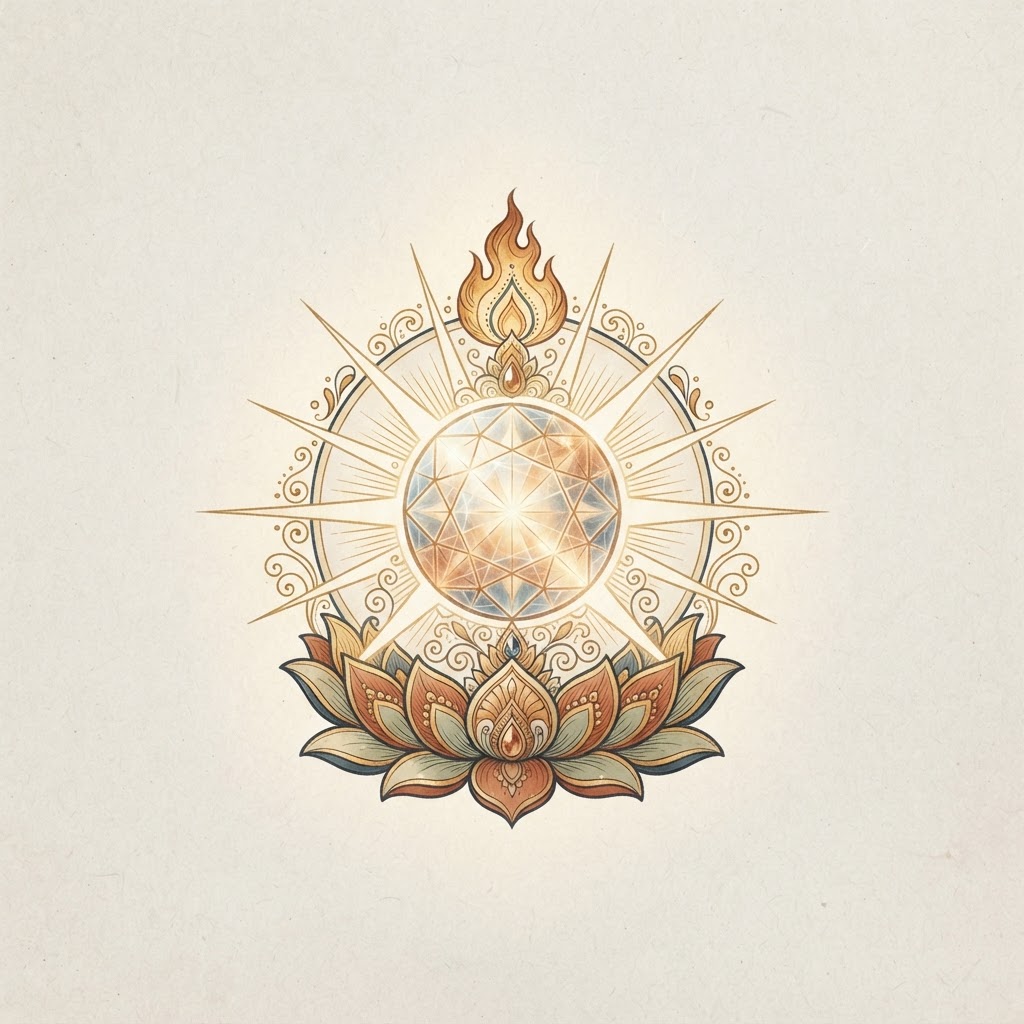
The Chintamani (Yidbzhin Norbu in Tibetan) is a legendary wish-fulfilling jewel originating in Hindu and Buddhist mythology, frequently portrayed as a luminous, multi-faceted crystal or spherical gem surrounded by a fiery radiant halo. It is commonly depicted being carried on the back of the Windhorse (Lungta) or held in the hands of compassionate Bodhisattvas such as Kshitigarbha, Avalokiteshvara, and Ratnasambhava.
While folklore describes the jewel as granting any material wish its holder desires, Buddhist philosophy interprets it metaphorically. The true wish-fulfilling jewel is the purified, enlightened mind itself, along with the teachings of the Dharma. These are the only treasures capable of satisfying the ultimate longing of sentient beings: permanent cessation of suffering and the realization of liberation.
Meaning of Chintamani
The Chintamani represents the awakened mind and the Dharma as the ultimate wish-fulfilling treasures that grant permanent liberation.
Origin & History
Mentioned extensively in early Mahayana sutras, such as the Lotus Sutra and the Avatamsaka Sutra, the Chintamani served as an allegorical device to contrast ephemeral worldly riches with enduring spiritual realization. Over time, it became a cornerstone motif in Himalayan thangka paintings, mandalas, and prayer flags, often clustered in groups of three to symbolize the Three Jewels.
Spiritual Meaning
The stone represents Bodhicitta—the altruistic aspiration to attain awakening for the benefit of all sentient beings. Just as the gem radiates light effortlessly in all directions, Bodhicitta spontaneously satisfies the spiritual needs of the cosmos.
Symbolism
The teardrop or faceted shape represents concentration and clarity; the enveloping flames symbolize the blazing fire of wisdom that consumes ignorance and material desire.
Traditional Uses
Traditionally envisioned as an actual miraculous artifact belonging to Chakravartins (universal monarchs) and high-level celestial deities, providing protection against famine, illness, and despair.
Modern Spiritual Uses
Modern spiritual practitioners view the Chintamani as a powerful symbol of manifestation, spiritual abundance, and discovering the inexhaustible wealth of self-worth within.
Healing Associations
Heals feelings of scarcity, revitalizes mental fatigue, and restores clarity to intentional manifestation.
Protection Associations
Dispels poverty consciousness, protects from spiritual destitution, and shields against psychic decay.
How the Symbol Is Used
- •Prosperity pujas
- •Bodhicitta visualization
- •Prayer flag dedication
- •Mani mantra recitation
Cultural Context
Buddhist — Ancient India / Tibet (Classical Antiquity)
Sources & References
- 1.The Handbook of Tibetan Buddhist Symbols by Robert Beer
- 2.The Jewel Ornament of Liberation by Gampopa
- 3.The Avatamsaka Sutra (Flower Adornment Sutra)
This content is for educational and informational purposes only. Where modern spiritual interpretations are described, they are not presented as ancient historical facts. It is not a substitute for professional medical or spiritual advice.