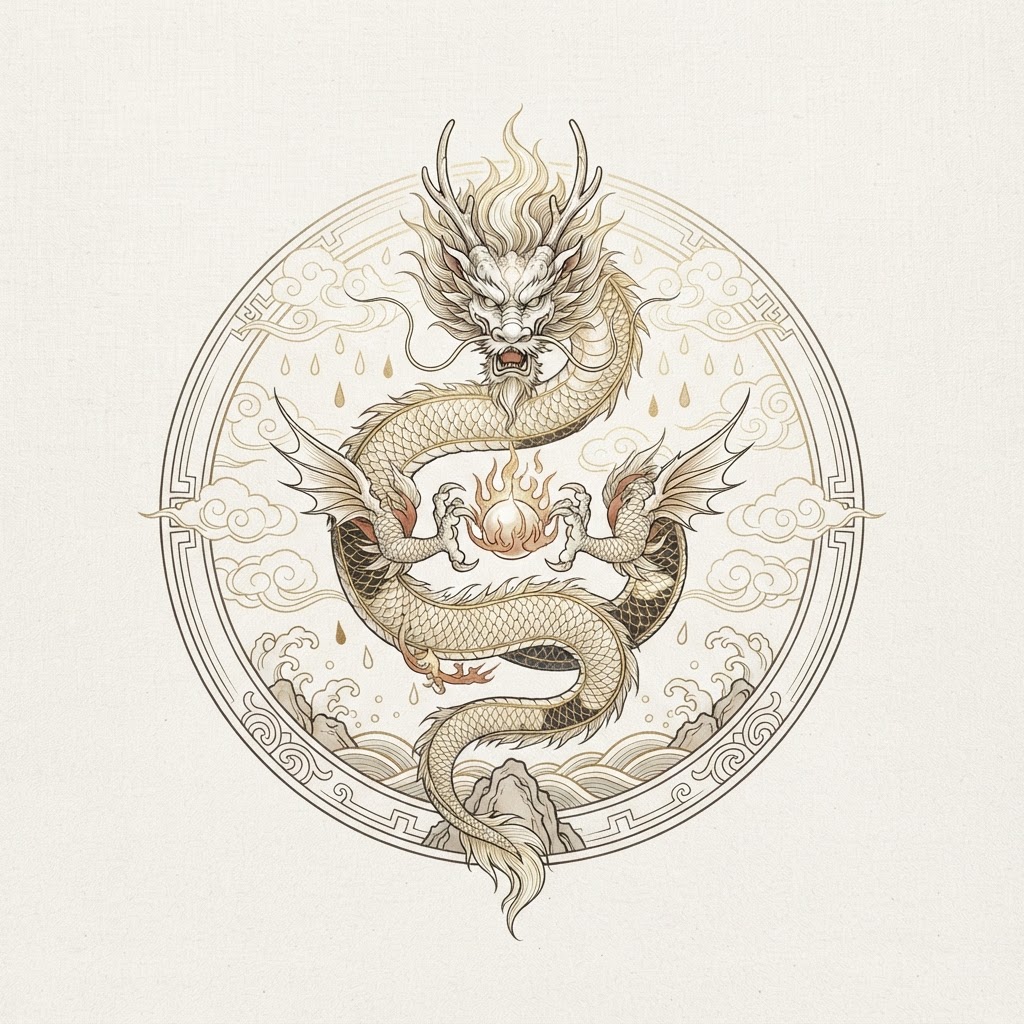
Chinese Dragon (Long): Meaning, Origin & Symbolism
Also known as: Long, Lung, Azure Dragon, Imperial Dragon
Taoist/Chinese
Taoist/Chinese
Solar Plexus Chakra
Third Eye Chakra
Water
Strength
Wisdom
Abundance
Protection
A benevolent, serpentine mythical creature embodying supreme Yang energy, rain, vitality, and spiritual power.
Quick Facts
- Category
- Taoist/Chinese
- Culture / Origin
- Taoist/Chinese
- Geographic Origin
- China
- Historical Period
- Neolithic (Hongshan culture) to present
- Estimated Age
- 5000+ years
- Element
- Water
- Planet
- Jupiter
- Chakra
- Solar Plexus, Third Eye
- Deities
- Dragon Kings (Longwang), Jade Emperor, Yellow Emperor
- Verification
- unverified
What is Chinese Dragon (Long)?
The Chinese Dragon, or Long, is one of the most prominent, revered, and foundational symbols in East Asian mythology and Taoism. Unlike the fire-breathing, treasure-hoarding monsters of European folklore, the Chinese Dragon is an inherently benevolent, auspicious, and sacred being closely connected to water, clouds, rainfall, and cosmic Yang vitality.
Traditional descriptions depict the Long as a composite creature combining traits of nine animals: the head of a camel, eyes of a demon, horns of a stag, ears of an ox, neck of a snake, belly of a clam, scales of a carp, claws of an eagle, and soles of a tiger. This composite nature signifies its mastery over all ecological domains—water, earth, and sky.
In Taoist thought, the Dragon represents the dynamic, untamable, yet harmonious primordial breath of the cosmos. It was chosen as the primary emblem of Chinese imperial majesty, decorating the imperial robes, thrones, and palaces of emperors who ruled as the 'Sons of Heaven'.
Meaning of Chinese Dragon (Long)
The Dragon represents supreme Yang energy, leadership, prosperity, fertility, and mastery over water, weather, and spiritual realms.
Origin & History
Archaeological excavations at Neolithic sites, such as the Hongshan culture (c. 4700–2900 BCE), have unearthed jade pig-dragons, confirming that dragon veneration has existed in China for over five millennia. As agricultural societies developed, the dragon became intimately tied to seasonal river floods and agricultural rainfall necessary for communal survival.
During the Han Dynasty, the Dragon was formally identified as the Azure Dragon of the East (Qinglong), one of the Four Sacred Symbols guarding the cardinal directions. Successive dynasties, particularly the Ming and Qing, strictly codified dragon imagery, reserving the five-clawed dragon exclusively for imperial use as a symbol of supreme earthly and heavenly mandate.
Spiritual Meaning
Spiritually, the Dragon represents the fully awakened, flowing spiritual energy within the adept. In internal alchemy, it personifies the Yang element residing in the liver and heart, often paired with the receptive White Tiger (Yin, lungs and kidneys). The spiritual task is to marry the Dragon and the Tiger, synthesizing their opposite powers into an integrated, enlightened consciousness.
Because the Dragon dwells comfortably in the ocean depths, ascends into the rainclouds, and roams across high mountain ranges, it serves as an archetype of spiritual adaptability and cosmic freedom. It embodies a mind that is fluid, magnificent, powerful, and deeply attuned to the unseen rhythms of the Tao.
Symbolism
Water association represents emotional depth, abundance, and agricultural life. The Flaming Pearl often chased by dragons represents transcendent wisdom, spiritual truth, and the pearl of celestial immortality. Its serpentine body signifies energetic vitality and unobstructed movement.
Traditional Uses
Traditionally revered as the rainmaker, ruler of all aquatic life, and protector of realms. It is the premier bringer of good luck, success, and high social honor in Chinese society.
Modern Spiritual Uses
In contemporary consciousness and global iconography, the Dragon represents inner strength, courage, visionary leadership, charisma, and the pursuit of excellence.
Healing Associations
Associated with liver health, unblocking stagnant Qi, and revitalizing exhausted physical vitality in energetic frameworks.
Protection Associations
Employed extensively in Feng Shui to dispel negative influences, overcome competitive malice, and anchor auspicious Qi in homes and offices.
How the Symbol Is Used
- •Feng Shui
- •Dragon Dance Rituals
- •Internal Martial Arts (Bagua, Xingyi)
- •Qigong
Cultural Context
Taoist/Chinese — China (Neolithic (Hongshan culture) to present)
Sources & References
- 1.Birrell, Anne. 'Chinese Mythology: An Introduction' (1993)
- 2.Sterckx, Roel. 'The Animal and the Daemon in Early China' (2002)
- 3.Doré, Henri. 'Researches into Chinese Superstitions' (1914)
This content is for educational and informational purposes only. Where modern spiritual interpretations are described, they are not presented as ancient historical facts. It is not a substitute for professional medical or spiritual advice.