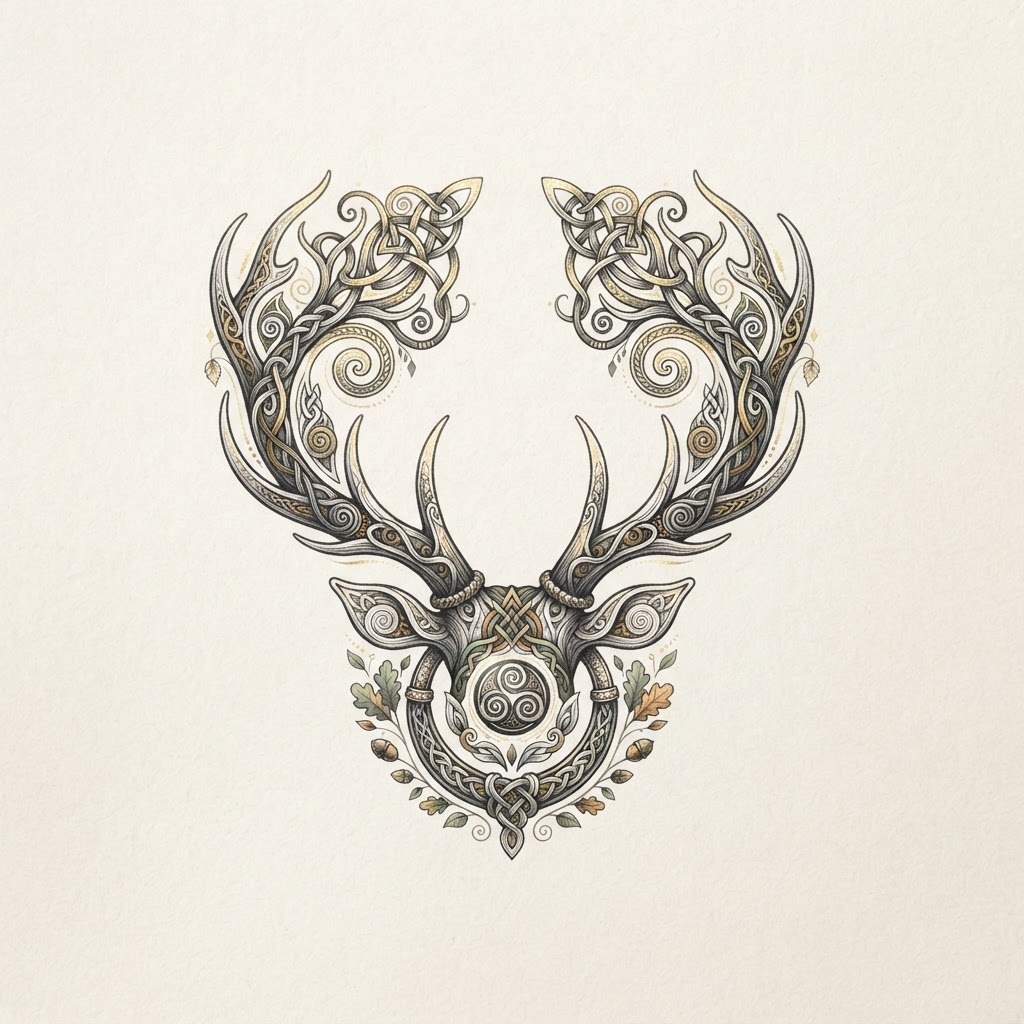
Cernunnos Antlers: Meaning, Origin & Symbolism
Also known as: Horned God Symbol, Stag Antlers of Cernunnos
Celtic
Celtic
Root Chakra
Crown Chakra
Earth
Vitality
Sovereignty
Transformation
Grounding
The branching stag antlers representing wild sovereignty, seasonal regeneration, and animal vitality.
Quick Facts
- Category
- Celtic
- Culture / Origin
- Celtic
- Geographic Origin
- Gaul and Britain
- Historical Period
- Iron Age to Gallo-Roman
- Estimated Age
- circa 300 BCE
- Element
- Earth
- Planet
- Mars
- Chakra
- Root, Crown
- Zodiac
- Aries, Sagittarius
- Deities
- Cernunnos
- Verification
- unverified
What is Cernunnos Antlers?
The motif of branching stag antlers is directly associated with Cernunnos, the ancient Celtic 'Horned God' of wild nature, animals, fertility, and the underworld. Most famously depicted on the silver Gundestrup Cauldron seated cross-legged holding a torc and a horned serpent, Cernunnos wears majestic stag antlers crowned upon his human head. The symbol captures the bridge between human consciousness and instinctual animal wisdom. Because antlers are cast off and re-grown every year with greater grandeur, they symbolize seasonal regeneration, male virility, and the wild, untamed forces of nature.
Meaning of Cernunnos Antlers
Wild sovereignty, natural fertility, regeneration, and communion with the animal kingdom.
Origin & History
Documented in Gallo-Roman stone reliefs (such as the Pillar of the Boatmen in Paris) and Celtic coinage, Cernunnos was worshiped across Gaul and Britain as a mediator between nature and human society. Antlered figures represent some of the most archaic shamanic spiritual traditions across Europe, surviving well into the Celtic Iron Age.
Spiritual Meaning
Cernunnos Antlers represent the crowning of human intellect with primal instinct. They embody a spiritual philosophy that respects the wilderness not as something to be conquered, but as a living temple. The symbol invites one to honor seasonal cycles, cultivate personal vitality, and embrace wild instinct with integrity and spiritual maturity.
Symbolism
The antlers mirror the branches of trees, bridging animal life with plant life; their cyclical shedding symbolizes death and renewal; their upright growth represents elevated spiritual perception.
Traditional Uses
Associated with hunting rites, abundance of wildlife, pastoral wealth, and protection of the deep forest.
Modern Spiritual Uses
Revered in Wicca and Neo-Paganism as the supreme emblem of the Horned God, embodying divine masculine energy, wilderness preservation, and raw creative power.
Healing Associations
Restores physical stamina, overcomes reproductive fatigue, and reconnects disconnected minds with the natural world.
Protection Associations
Wards against loss of personal instincts, physical vulnerability in wild environments, and energetic emasculation.
How the Symbol Is Used
- •Wilderness rituals
- •Divine masculine invocations
- •Shamanic journeying
Cultural Context
Celtic — Gaul and Britain (Iron Age to Gallo-Roman)
Sources & References
- 1.Bober, Phyllis Pray. 'Cernunnos: Origin and Transformation of a Celtic Divinity.' American Journal of Archaeology, 1951.
- 2.Green, Miranda. 'Animals in Celtic Life and Myth.' Routledge, 1992.
This content is for educational and informational purposes only. Where modern spiritual interpretations are described, they are not presented as ancient historical facts. It is not a substitute for professional medical or spiritual advice.