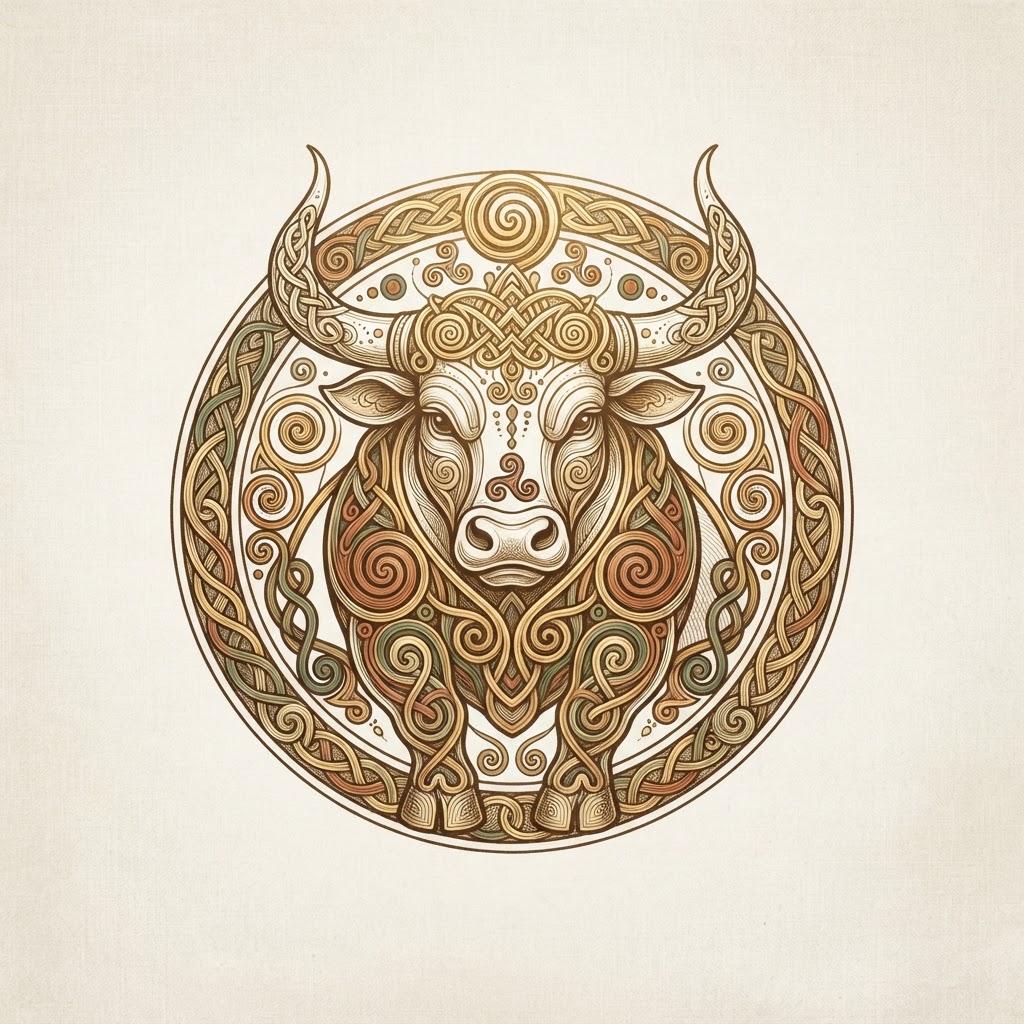
Celtic Bull: Meaning, Origin & Symbolism
Also known as: Tarbh, Bull of Cooley, Donn Cúailnge
Celtic
Celtic
Root Chakra
Sacral Chakra
Earth
Transformation
Protection
Wisdom
A potent emblem of fertility, physical potency, sovereignty, and wealth in ancient Celtic myth and warfare.
Quick Facts
- Category
- Celtic
- Culture / Origin
- Celtic
- Geographic Origin
- Gaul, Britain, and Ireland
- Historical Period
- Iron Age to Early Medieval
- Estimated Age
- circa 300 BCE
- Element
- Earth
- Planet
- Mars
- Chakra
- Root, Sacral
- Zodiac
- Taurus
- Deities
- The Dagda, Tarvos Trigaranus, Lugh
- Verification
- unverified
What is Celtic Bull?
The Celtic Bull (in Irish, 'Tarbh') is an ancient zoomorphic symbol signifying masculine potency, unyielding physical strength, agrarian fertility, and undisputed sovereignty. In the pastoral warrior economies of Iron Age Europe, cattle were the primary currency of tribal wealth and social status, elevating the supreme bull to a creature of divine proportion.
Representations of horned bulls regularly appear on Gaulish coins, ceremonial cauldrons such as the famous Gundestrup Cauldron, bronze votive statues, and war standards. Bulls were often depicted with three horns in Continental Celtic iconography, magnifying their sacred, otherworldly potency through the holy triad.
In Irish heroic literature, entire epic sagas, notably the Táin Bó Cúailnge (The Cattle Raid of Cooley), revolve around the acquisition of legendary supernatural bulls. As a symbol, the Celtic Bull commands respect, representing fierce vitality, wealth creation, and the raw, untamable authority of the natural landscape.
Meaning of Celtic Bull
The Celtic Bull signifies raw power, wealth, sexual and agricultural fertility, and tribal sovereignty.
Origin & History
Veneration of the bull was prevalent across Continental and Insular Celtic domains. The Druids regularly performed the 'tarbfeis' (bull feast or bull sleep), a divinatory ritual in which a white bull was sacrificed, its meat consumed, and a seer slept wrapped in its hide to receive prophetic dreams regarding the identity of the next rightful king.
Throughout Gaul, bulls were linked with celestial solar gods and deities such as Tarvos Trigaranus ('The Bull with Three Cranes'), whose image is carved into the Roman-era Pillar of the Boatmen in Paris. These relics corroborate that the bull was regarded not merely as livestock, but as a dynamic intermediary between cosmic forces and mortal power.
Spiritual Meaning
In spiritual work, the bull stands for generative creation and untamed primordial drive. It teaches the mastery of life force, raw instinct, and the conscious grounding of passion into enduring material prosperity.
It challenges the practitioner to stand immovable against intimidation, cultivate steadfast perseverance, and protect communal resources with resolute bravery.
Symbolism
The horns symbolize lunar crescents, sovereignty, and elevated spiritual receptors; the powerful body signifies physical endurance, territorial defense, and abundant wealth.
Traditional Uses
A sovereign creature of kingship and wealth, central to prophetic rites like the tarbfeis and the determination of sacred tribal leadership.
Modern Spiritual Uses
Viewed today as an embodiment of abundance mindset, personal determination, physical endurance, and primal vitality.
Healing Associations
Supports vitality, stamina recovery, physical revitalization, and addressing reproductive or vitality-related blockages.
Protection Associations
Used to guard personal territories, establish absolute boundaries, and repel aggressive spiritual attacks.
How the Symbol Is Used
- •Prosperity Magic
- •Divination
- •Totem Devotion
- •Sovereignty Rites
Cultural Context
Celtic — Gaul, Britain, and Ireland (Iron Age to Early Medieval)
Sources & References
- 1.Olmsted, Garrett S. 'The Gundestrup Cauldron.' Latomus, 1979.
- 2.Kinsella, Thomas. 'The Tain: Translated from the Irish Epic Tain Bo Cuailnge.' Oxford University Press, 1969.
This content is for educational and informational purposes only. Where modern spiritual interpretations are described, they are not presented as ancient historical facts. It is not a substitute for professional medical or spiritual advice.