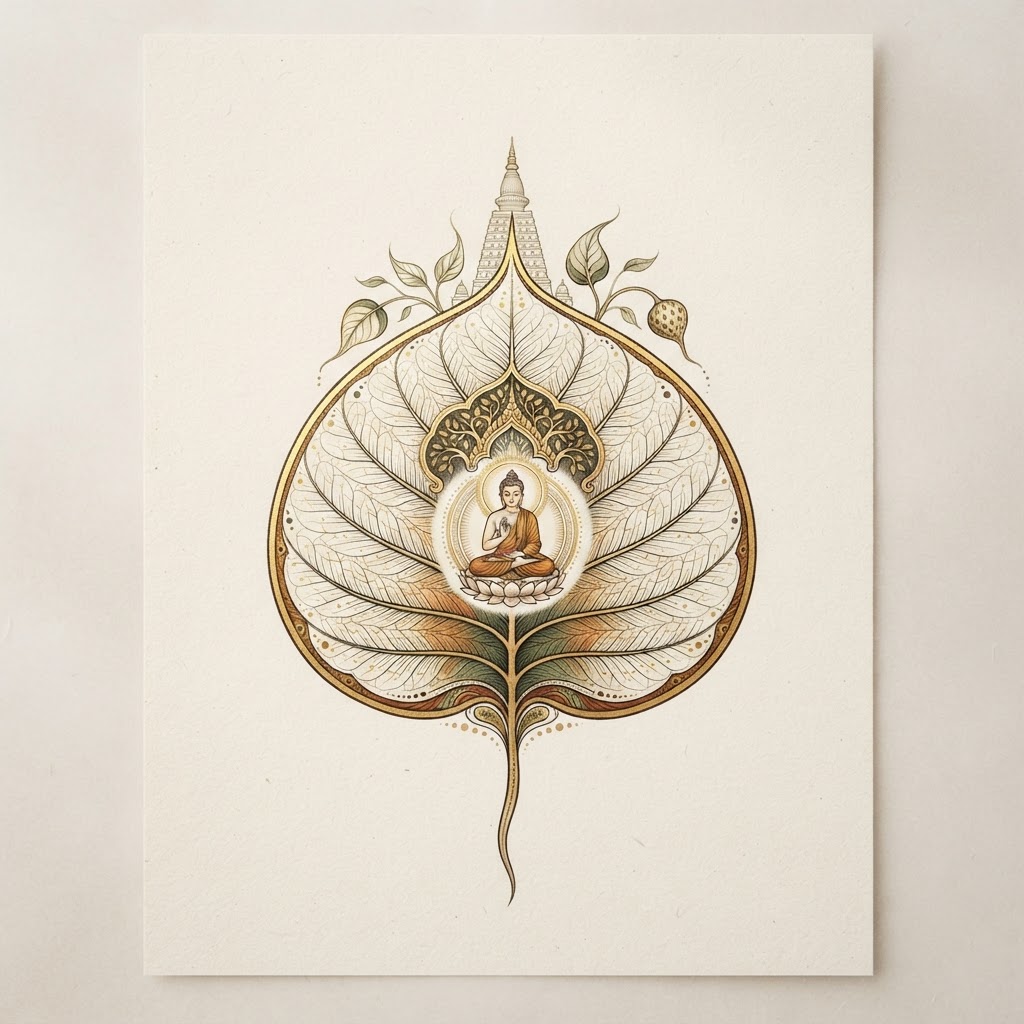
Bodhi Leaf: Meaning, Origin & Symbolism
Also known as: Bo Leaf, Pipal Leaf, Ficus Religiosa Leaf
Buddhist
Buddhist
Heart Chakra
Earth
Wisdom
Peace
Harmony
The heart-shaped leaf of the sacred fig tree, celebrating the historical location and exact moment of the Buddha's awakening.
Quick Facts
- Category
- Buddhist
- Culture / Origin
- Buddhist
- Geographic Origin
- Ancient India
- Historical Period
- Classical Antiquity
- Estimated Age
- circa 5th century BCE
- Element
- Earth
- Planet
- Jupiter
- Chakra
- Heart
- Deities
- Gautama Buddha
- Verification
- unverified
What is Bodhi Leaf?
The Bodhi Leaf comes from the sacred fig tree (Ficus religiosa), known as the Bodhi Tree, located at Bodh Gaya in Bihar, India. It was while sitting in deep meditation beneath this specific tree that Siddhartha Gautama resolved not to rise until he had unlocked the riddle of mortal suffering, ultimately achieving full enlightenment and becoming the Buddha. Characterized by its broad, heart-shaped blade and an unusually elongated, tapering drip tip, the Bodhi leaf has become a worldwide emblem of the awakening mind (bodhicitta). It embodies peace, patience, steadfast resolution, and the living legacy of the Buddha's realization, carried as sacred mementos by pilgrims across millennia.
Meaning of Bodhi Leaf
Awakening, spiritual fruition, steadfast resolution, and deep connection to the living historical Buddha.
Origin & History
Following the Buddha's parinirvana, descendants of the original Bodhi Tree were planted across Asia, most notably the Jaya Sri Maha Bodhi in Anuradhapura, Sri Lanka, planted in 288 BCE by Sanghamitta Theri. This living specimen remains the oldest historically verified cultivated tree in the world.
Spiritual Meaning
The Bodhi Leaf represents the exact nexus point where humanity touches the transcendent. It teaches patience and persistence, reminding the practitioner that liberation happens right here on Earth through grounded, mindful presence.
Symbolism
Its heart-like silhouette reflects universal compassion; its extended drip tip points toward focused one-pointed awareness; its deep root system symbolizes grounding in truth.
Traditional Uses
Venerated across Theravada and Mahayana traditions as a sacred relic possessing protective, merit-generating energy and reminders of monastic dedication.
Modern Spiritual Uses
Widely utilized in eco-spirituality, vegan culture, and modern meditation groups as a sign of environmental consciousness and mindful living.
Healing Associations
Grounds frayed nerves, calms erratic thoughts, and supports deep cardiac relaxation.
Protection Associations
Promotes mental stability, clears restless thinking, and protects against doubt during meditation.
How the Symbol Is Used
- •Pilgrimage Keepsakes
- •Mindful Meditation
- •Tree Veneration Rituals
Cultural Context
Buddhist — Ancient India (Classical Antiquity)
Sources & References
- 1.Buddhism: A Cultural History by Carl Olson
- 2.The Tree of Enlightenment by Peter Della Santina
This content is for educational and informational purposes only. Where modern spiritual interpretations are described, they are not presented as ancient historical facts. It is not a substitute for professional medical or spiritual advice.