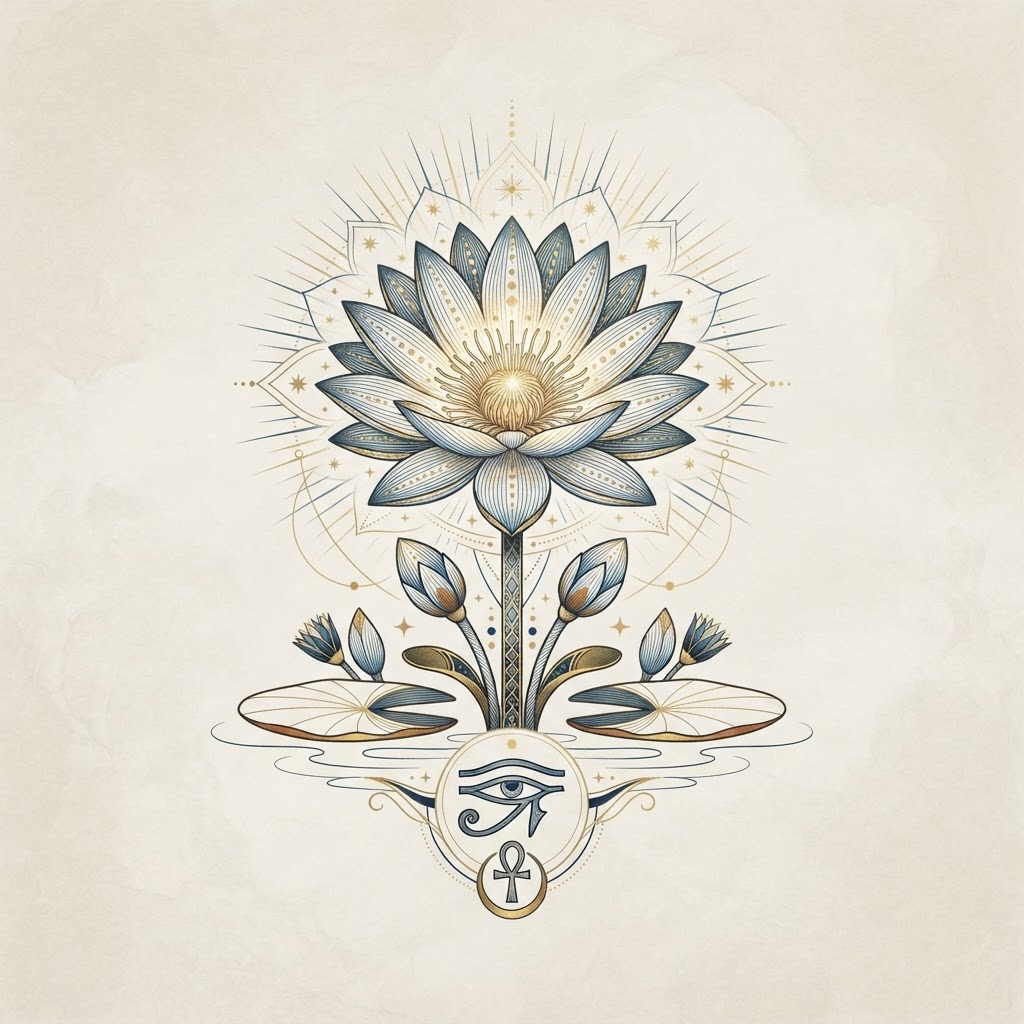
Blue Lotus: Meaning, Origin & Symbolism
Also known as: Seshen, Egyptian Water Lily, Nymphaea caerulea, Sacred Blue Lily
Ancient Egyptian
Ancient Egyptian
Crown Chakra
Third Eye Chakra
Water
Peace
Healing
Transformation
A sacred aquatic flower symbolizing the dawn, solar creation, spiritual rebirth, and altered states of consciousness.
Quick Facts
- Category
- Ancient Egyptian
- Culture / Origin
- Ancient Egyptian
- Geographic Origin
- Egypt (Nile River Basin)
- Historical Period
- Old Kingdom through Roman Period
- Estimated Age
- circa 3000 BCE
- Element
- Water
- Planet
- Neptune
- Chakra
- Crown, Third Eye
- Zodiac
- Pisces, Cancer
- Deities
- Nefertem, Ra, Hathor
- Verification
- unverified
What is Blue Lotus?
The Egyptian Blue Lotus (Nymphaea caerulea) is a sacred freshwater water lily that figured prominently in ancient Egyptian art, temple architecture, and religious ceremonies. The plant roots in the dark mud of the Nile and slow-moving marshes, sending its blossoms above the surface to open each morning to the sun and close and submerge each evening.
Because of this remarkable daily rhythm, the lotus was viewed as the primordial cradle from which the sun god Ra first arose at the dawn of creation (the concept of Nefertem). It became an enduring emblem of the morning, spiritual rebirth, beauty, and renewal.
In addition to its symbolic value, the Blue Lotus possessed mild psychoactive and entheogenic properties. It was steeped in wine during festive and spiritual banquets to facilitate tranquility, induce states of ecstasy, and open pathways to divine communion.
Meaning of Blue Lotus
The Blue Lotus symbolizes solar creation, spiritual rebirth, expanded consciousness, and purity.
Origin & History
Lotus columns and floral motifs are found throughout ancient Egyptian architecture, including the temple complexes of Karnak and Luxor. In tomb murals, guests at banquets are invariably shown holding blue lotus blossoms to their noses to inhale its delicate fragrance.
In the Book of the Dead, Spell 81 provides the deceased with the power to transform their spiritual body into a sacred blue lotus flower, highlighting its indispensable role in overcoming death and attaining eternal radiance.
Spiritual Meaning
Spiritually, the lotus represents the awakening of pure consciousness out of the muddy, unenlightened morass of physical existence. It demonstrates that spiritual illumination can unfold cleanly and beautifully regardless of humble or murky origins.
Its cyclic opening to the morning sun teaches attunement to divine light, receptivity, and the tranquil elevation of the mind toward higher celestial dimensions.
Symbolism
The mud represents primeval unmanifest matter, the water denotes spiritual emotion and the unconscious, the stem represents the ascent of consciousness, and the open blue blossom symbolizes the illuminated, fragrant soul.
Traditional Uses
An emblem of Nefertem and the primeval flower from which the sun emerged, ensuring daily renewal and sensory pleasure in the afterworld.
Modern Spiritual Uses
Widely embraced in modern wellness for lucid dreaming, nervous system relaxation, meditation, and third eye awakening.
Healing Associations
Used historically to calm anxiety, relieve nervous tension, and alleviate melancholy.
How the Symbol Is Used
- •Aromatherapy
- •Lucid dreaming
- •Herbal relaxation
- •Chakra meditation
Cultural Context
Ancient Egyptian — Egypt (Nile River Basin) (Old Kingdom through Roman Period)
Sources & References
- 1.Emboden, William. The Sacred Narcotic Lily of the Nile: Nymphaea caerulea. Economic Botany, 1978.
- 2.Wilkinson, Richard H. Symbol & Magic in Egyptian Art. Thames & Hudson, 1994.
This content is for educational and informational purposes only. Where modern spiritual interpretations are described, they are not presented as ancient historical facts. It is not a substitute for professional medical or spiritual advice.