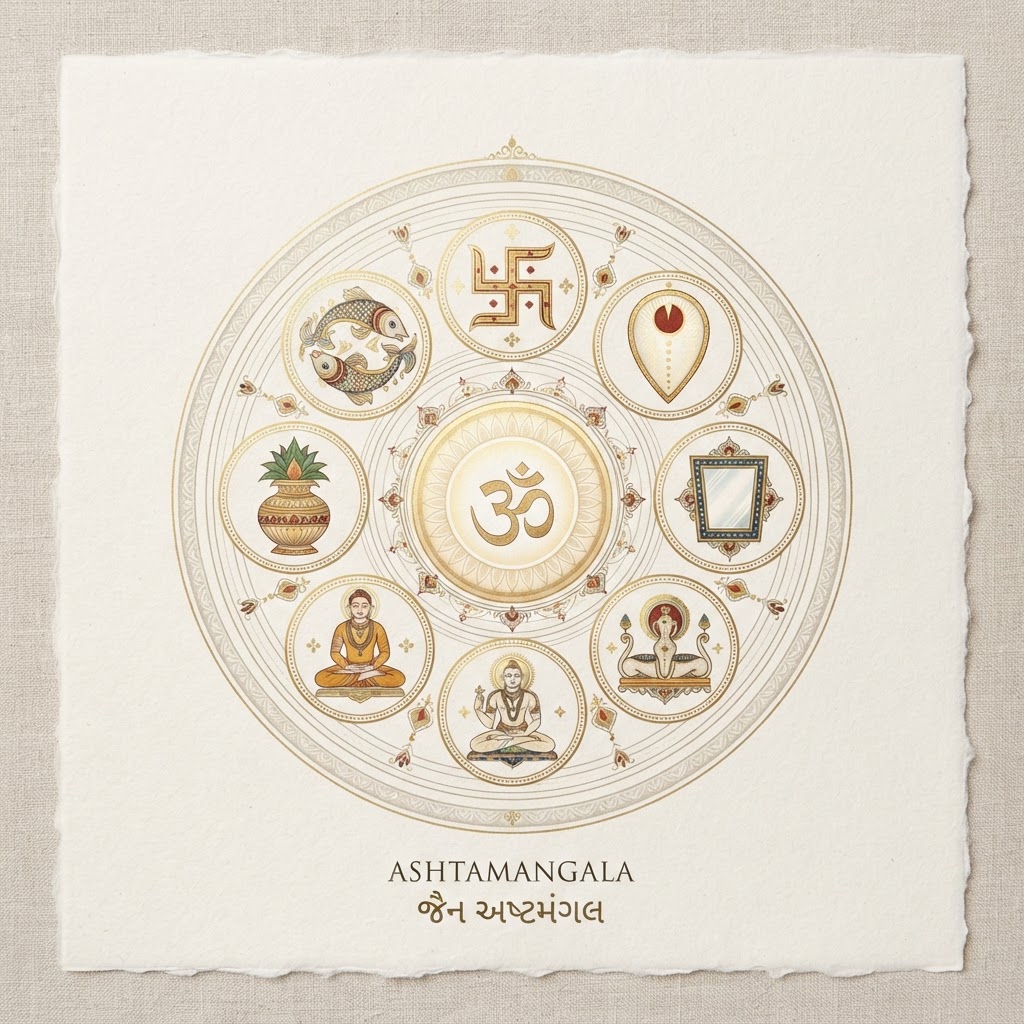
Ashtamangala (Jain): Meaning, Origin & Symbolism
Also known as: Eight Auspicious Symbols of Jainism, Eight Jain Treasures
Jain
Jain
Heart Chakra
Third Eye Chakra
Water
Protection
Wisdom
Transformation
A consecrated suite of eight sacred emblems used in temple worship, ritual arts, and meditative consecration.
Quick Facts
- Category
- Jain
- Culture / Origin
- Jain
- Geographic Origin
- India
- Historical Period
- Classical Antiquity
- Estimated Age
- 2200+ years
- Element
- Water
- Chakra
- Heart, Third Eye
- Deities
- The 24 Tirthankaras
- Verification
- unverified
What is Ashtamangala (Jain)?
The Ashtamangala is a traditional ensemble of eight auspicious motifs widely revered across both major branches of Jainism, though the Digambara and Shvetambara traditions exhibit minor variations in their lists. In the Shvetambara tradition, they comprise the Swastika, Shrivatsa, Nandavarta, Vardhamanaka (powder flask), Bhadrasana (holy throne), Kalasha (sacred water pot), Minayugala (pair of fish), and Darpana (mirror).
In the Digambara tradition, the list includes the Bhringara (vessel), Kalasha, Darpana, Chamara (fly-whisk), Dhvaja (banner), Vyajana (fan), Chhatra (parasol), and Supratishtha (auspicious seat). These symbols appear prominently on Ayagapatas (votive plaques), temple doorways, manuscript covers, and are ritually formed out of fragrant rice during elaborate Pujas.
Collectively, they invoke divine presence, mark sacred thresholds, celebrate the life events of the Tirthankaras, and signify royal spiritual sovereignty over the material realm.
Meaning of Ashtamangala (Jain)
Eight auspicious emblems that purify ritual space, herald spiritual triumph, and bless sacred endeavors.
Origin & History
Archaeological excavations at the ancient site of Mathura (Kankali Tila) have produced stone Ayagapatas dating back to the 1st century BCE and 1st century CE that clearly feature the Ashtamangala framing images of Tirthankaras.
These motifs reflect early pan-Indian emblems of royal and celestial consecration adapted by Jains to denote the spiritual kingship of enlightened victors who conquer internal passions.
Spiritual Meaning
Each of the eight emblems directs the practitioner toward a distinct facet of spiritual cultivation: the mirror reflects pure self-awareness, the pot indicates spiritual fullness, the fish signify sovereignty in life's ocean, and the throne honors inner sovereignty.
Viewing or drawing the Ashtamangala creates an auspicious mental state, transforming external ritual into internal contemplation of purity and victory over desires.
Symbolism
The eight symbols collectively represent cosmic order, royal spiritual dignity, the abundance of wisdom, clear self-reflection, and protection from negative influences.
Traditional Uses
Sacred visual tokens used to welcome Tirthankaras, sanctify religious ceremonies, and attract spiritual merit (Punya).
Modern Spiritual Uses
Admired in sacred geometry and home decor as visual affirmations of serenity, abundance, and ancient spiritual heritage.
Healing Associations
Restores energetic balance and calm focus during sacred ceremonies and meditation.
Protection Associations
Installed around entrances and sanctums to ward off inauspicious energies and purify the environment.
How the Symbol Is Used
- •Temple consecration (Pratishtha)
- •Ayagapata worship
- •Daily temple rituals
Cultural Context
Jain — India (Classical Antiquity)
Sources & References
- 1.Shah, Umakant Premanand. Studies in Jaina Art. Banaras Hindu University, 1955.
- 2.Tiwari, Maruti Nandan Prasad. Elements of Jaina Iconography. Indological Publishers, 1983.
This content is for educational and informational purposes only. Where modern spiritual interpretations are described, they are not presented as ancient historical facts. It is not a substitute for professional medical or spiritual advice.