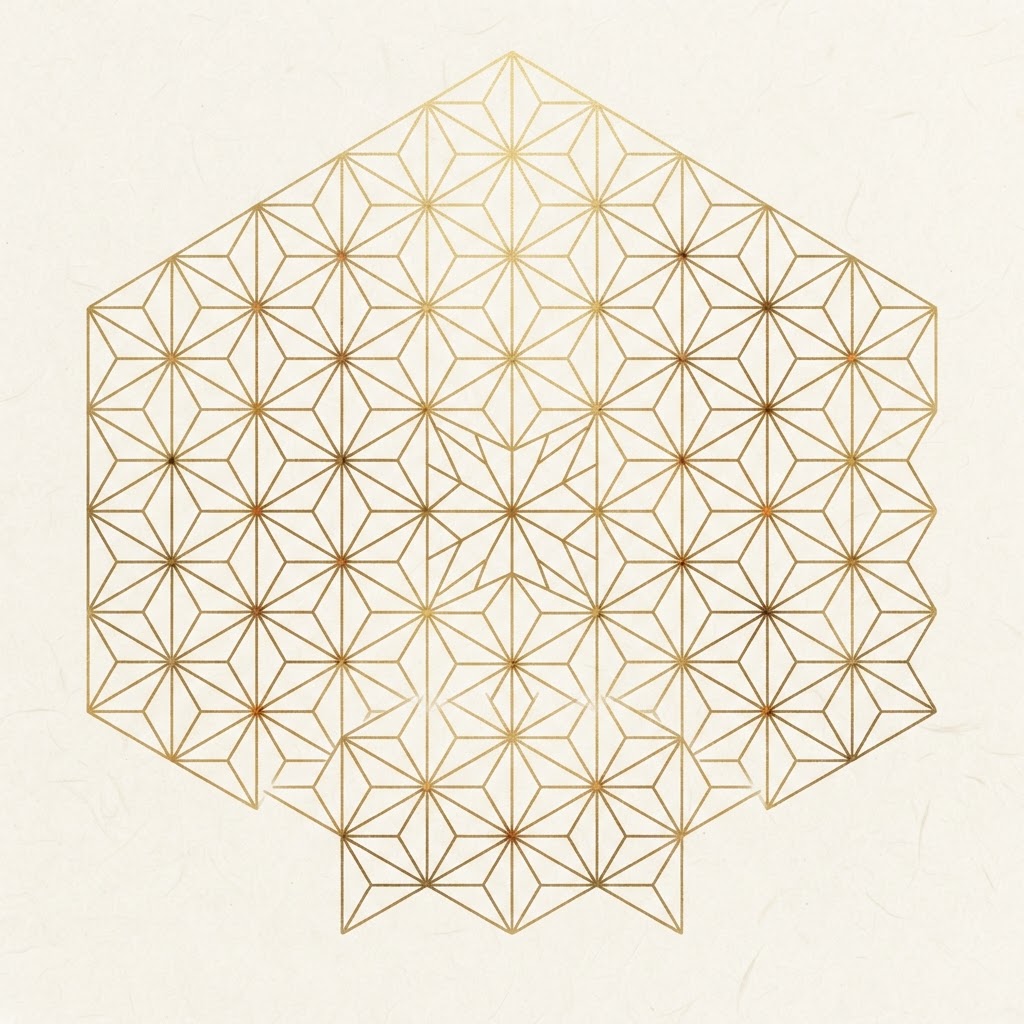
Asanoha: Meaning, Origin & Symbolism
Also known as: Hemp Leaf Pattern, Asanoha Mon
Japanese
Japanese
Root Chakra
Solar Plexus Chakra
Earth
Protection
Vitality
Grounding
A traditional Japanese geometric star-hexagonal pattern symbolizing rapid, healthy growth, vitality, and protective shielding.
Quick Facts
- Category
- Japanese
- Culture / Origin
- Japanese
- Geographic Origin
- Japan
- Historical Period
- Heian Period to Present
- Estimated Age
- Over 1,000 years
- Element
- Earth
- Planet
- Sun
- Chakra
- Root, Solar Plexus
- Verification
- unverified
What is Asanoha?
The Asanoha is a timeless Japanese geometric motif composed of regular six-pointed star polygons forming an infinite interlocking hexagonal tessellation. The pattern visually abstractly mimics the silhouette of radiating hemp leaves (asa).
Renowned for its remarkable strength, resilience, and rapid growth without demanding delicate agricultural maintenance, the hemp plant held sacred status in ancient and Shinto Japan. Consequently, the Asanoha pattern became imbued with the plant's spiritual attributes: robust health, vigorous physical and spiritual development, and unwavering vitality.
Traditionally used on newborn swaddling clothes, children's kimonos, and protective amulets, the mesmerizing symmetry of the Asanoha was also believed to confuse and disperse harmful spiritual influences through its complex sacred geometry.
Meaning of Asanoha
Represents vigorous growth, radiant health, resilience, and protective warding against evil.
Origin & History
Although hemp was utilized in Japan since prehistoric Jomon times for weaving, cords, and Shinto ritual garments, the stylized Asanoha pattern gained widespread prominence during the Heian and Kamakura periods in Buddhist statuary embellishments (kirikane).
During the Edo period, the pattern skyrocketed into mainstream fashion when celebrated Kabuki actors wore Asanoha robes onstage. It subsequently became the universal standard textile pattern for infants and young children across all social classes to wish them vigorous health and protection from childhood illnesses.
Spiritual Meaning
The Asanoha pattern embodies the unimpeded, upward thrust of life energy. Just as hemp shoots shoot straight toward the sky without bowing, the pattern encourages humans to develop morally and spiritually upright, unbowed by worldly pressures.
Its sacred geometric precision reflects the underlying order and crystalline harmony of the universe, reminding the observer of the interconnected lattice of existence where each life is woven into a greater cosmic fabric.
Symbolism
The six radiating triangular segments within each hexagram represent complete multidirectional balance and expansive growth. The sharp points form an energetic grid that deflects negative energetic interference.
Traditional Uses
In Shinto-influenced folklore, the sacred nature of hemp dispels demonic pollution (kegare); wrapping children in Asanoha patterns ensures they grow up healthy, strong, and morally straight.
Modern Spiritual Uses
Admired in sacred geometry and wellness circles as a mandala of vital growth, cellular rejuvenation, resilience, and structural balance.
Healing Associations
Energetically supports physical recovery, pediatric wellness, energetic vitality, and spine alignment.
Protection Associations
Deters evil spirits, illnesses, curses, and negative atmospheric vibrations through geometric deflection.
How the Symbol Is Used
- •Traditional kimono weaving
- •Shinto purification vestment making
- •Kirikane Buddhist decorative art
Cultural Context
Japanese — Japan (Heian Period to Present)
Sources & References
- 1.Yagi, Hideo. 'Wagara: Japanese Traditional Patterns and Motifs.' PIE Books, 2018.
- 2.Dower, John W. 'The Elements of Japanese Design.' Weatherhill, 1971.
This content is for educational and informational purposes only. Where modern spiritual interpretations are described, they are not presented as ancient historical facts. It is not a substitute for professional medical or spiritual advice.