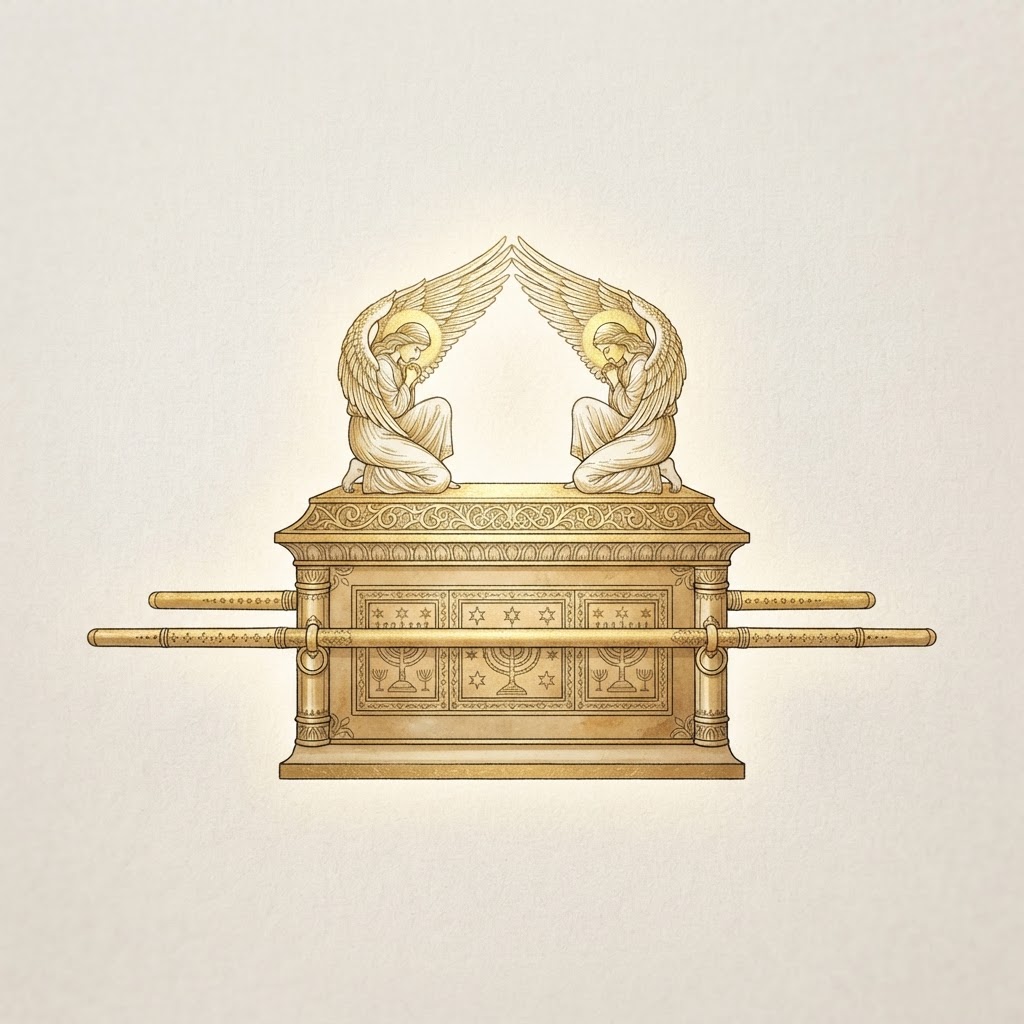
Ark of the Covenant: Meaning, Origin & Symbolism
Also known as: Aron HaBerit, Ark of the Testimony, Ark of God
Abrahamic
Israelite / Jewish
Heart Chakra
Crown Chakra
Ether/Spirit
Protection
Wisdom
Transformation
The sacred gold-plated chest that held the Ten Commandments, crowned by the Mercy Seat and two cherubim.
Quick Facts
- Category
- Abrahamic
- Culture / Origin
- Israelite / Jewish
- Geographic Origin
- Sinai Peninsula / Ancient Israel
- Historical Period
- Late Bronze Age to Iron Age
- Estimated Age
- circa 13th Century BCE
- Element
- Ether/Spirit
- Planet
- Sun
- Chakra
- Heart, Crown
- Deities
- YHWH
- Verification
- unverified
What is Ark of the Covenant?
The Ark of the Covenant was the most sacred object in ancient Israelite religion, built according to divine specifications revealed to Moses atop Mount Sinai. Constructed of durable acacia wood and overlaid inside and out with pure gold, it was carried using gold-plated acacia poles inserted through four rings at its corners.
Resting upon the Ark was the Kaporet ('Mercy Seat' or atonement cover), fashioned of solid gold with two sculpted cherubim whose outstretched wings covered the chest. Inside rested the two stone tablets of the Ten Commandments, Aaron's rod that budded, and a golden jar of manna, marking it as the earthly footstool of God's presence.
Meaning of Ark of the Covenant
The supreme physical vessel of God's holy presence, covenant, and righteous commandments on Earth.
Origin & History
The Ark accompanied the Israelites through their 40-year desert migration, leading the march and crossing of the Jordan River, as well as the fall of Jericho. It resided in Shiloh before King David triumphantly brought it to Jerusalem.
King Solomon placed it into the Holy of Holies (Kodesh HaKodashim) inside the First Temple. Following the Babylonian conquest and destruction of Jerusalem in 586 BCE by Nebuchadnezzar II, the Ark disappeared from history, giving rise to numerous legends concerning its concealment.
Spiritual Meaning
The Ark signifies the dwelling of the Shekinah—the visible, radiant presence of God among humanity. It demonstrates that the holy, limitless Creator chooses to dwell in intimate relationship with his people, provided they honor the ethical covenant.
The empty space between the protective wings of the cherubim over the Mercy Seat conveyed that God cannot be depicted by any idol, manifesting true transcendence: an uncontainable God enthroned upon holiness, accessible through sincere atonement and repentance.
Symbolism
Acacia wood represents incorruptibility and resilience; pure gold represents divine purity; the cherubim wings symbolize awe, reverence, and angelic guard.
Traditional Uses
The sacred focal point of the Tabernacle and Temple where the High Priest once a year offered incense and blood on Yom Kippur.
Modern Spiritual Uses
An enduring archetype of sacred guardianship, divine fidelity, and the profound sanctity of moral and spiritual truth.
Healing Associations
Associated with national reconciliation, atonement, and spiritual cleansing during the Day of Atonement.
Protection Associations
Carried into battle during early biblical history as a guarantee of divine assistance against oppressors.
How the Symbol Is Used
- •High Priesthood Rites
- •Yom Kippur Atonement
- •Biblical Devotion
Cultural Context
Israelite / Jewish — Sinai Peninsula / Ancient Israel (Late Bronze Age to Iron Age)
Sources & References
- 1.Hebrew Bible (Books of Exodus, Leviticus, and 1 Kings)
- 2.Haran, Menahem, 'Temples and Temple-Service in Ancient Israel'
- 3.Silberman, Neil Asher, 'The Bible Unearthed'
This content is for educational and informational purposes only. Where modern spiritual interpretations are described, they are not presented as ancient historical facts. It is not a substitute for professional medical or spiritual advice.