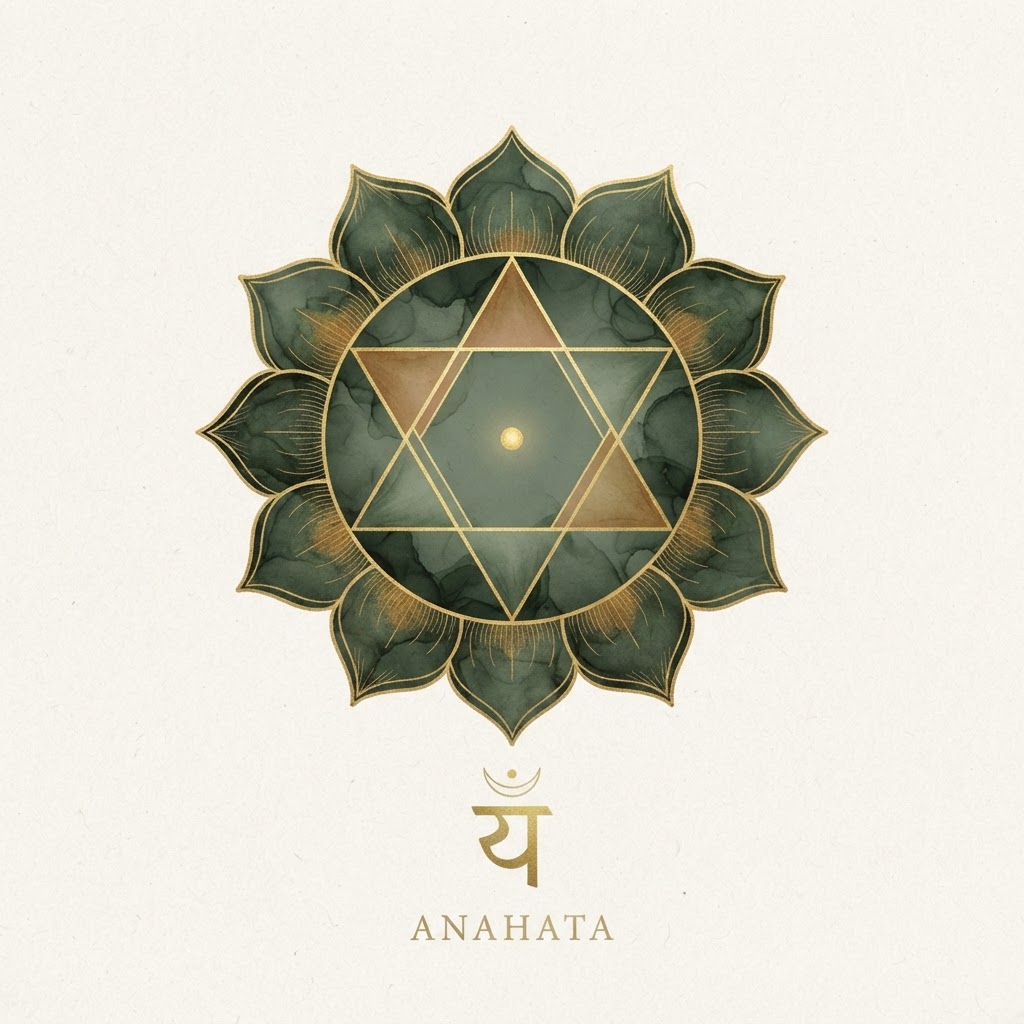
Anahata Chakra Symbol: Meaning, Origin & Symbolism
Also known as: Heart Chakra Yantra, Unstruck Sound Center, Hrit Padma
Yogic
Yogic / Tantric
Heart Chakra
Air
Love
Peace
Healing
Harmony
Compassion
The heart energy center depicted as a twelve-petaled smoky-green lotus containing a six-pointed star (hexagram).
Quick Facts
- Category
- Yogic
- Culture / Origin
- Yogic / Tantric
- Geographic Origin
- India
- Historical Period
- Medieval Period
- Estimated Age
- circa 10th Century CE
- Element
- Air
- Planet
- Venus
- Chakra
- Heart
- Zodiac
- Libra, Taurus
- Deities
- Isha, Kakini, Hanuman
- Verification
- unverified
What is Anahata Chakra Symbol?
The Anahata symbol represents the fourth energy center located in the cardiac region of the subtle body. Its icon features a twelve-petaled lotus enclosing a central hexagram (Shatkona) composed of two interlacing triangles. The word 'Anahata' translates to 'unstruck' or 'unbeaten', referring to the primordial cosmic sound that exists without two physical objects striking together. Positioned exactly at the midpoint of the seven chakras, Anahata bridges the lower three material chakras with the upper three transcendent chakras, embodying harmony, selfless compassion, devotional surrender (Bhakti), and inner balance.
Meaning of Anahata Chakra Symbol
Unstruck celestial resonance, universal love, balance, and selfless compassion.
Origin & History
Described thoroughly in medieval tantric literature including the Shat-Chakra-Nirupana and Goraksha Shataka, Anahata was considered the altar of the Jivatman (individual soul) and the interior space of meditative communion. In Vaishnava and Shaiva Bhakti traditions, the heart lotus was envisioned as the inner sanctuary where the devotee communes intimately with the chosen deity (Ishta-Devata).
Spiritual Meaning
Anahata represents the transformation of selfish attachment into unconditional love. It is the locus where the individual consciousness touches the divine spirit, opening the door to profound empathy and non-dual kinship with all living beings.
Symbolism
The twelve petals represent twelve positive and negative emotional modifications (such as hope, anxiety, arrogance, and love). The hexagram (Shatkona) signifies the exact equilibrium between the ascending aspiration of humanity (upward triangle) and the descending grace of the divine (downward triangle).
Traditional Uses
The center governed by the Vayu (Air) element and the seed syllable 'Yam'. It houses the wish-fulfilling tree (Kalpavriksha) and represents the seat of the inner self.
Modern Spiritual Uses
Interpreted in modern wellness as the center of emotional healing, forgiveness, radical compassion, and heart-brain coherence.
Healing Associations
Promotes cardiovascular health, emotional trauma recovery, respiratory relief, and inner peace.
Protection Associations
Provides psychic defense against bitterness, emotional cynicism, and energetic drainage through radiant loving-kindness.
How the Symbol Is Used
- •Bhakti Yoga
- •Heart Meditations
- •Pranayama
- •Kirtan
Cultural Context
Yogic / Tantric — India (Medieval Period)
Sources & References
- 1.Sat-Chakra-Nirupana
- 2.Swami Satyananda Saraswati, Kundalini Tantra
- 3.Goraksha Shataka
This content is for educational and informational purposes only. Where modern spiritual interpretations are described, they are not presented as ancient historical facts. It is not a substitute for professional medical or spiritual advice.