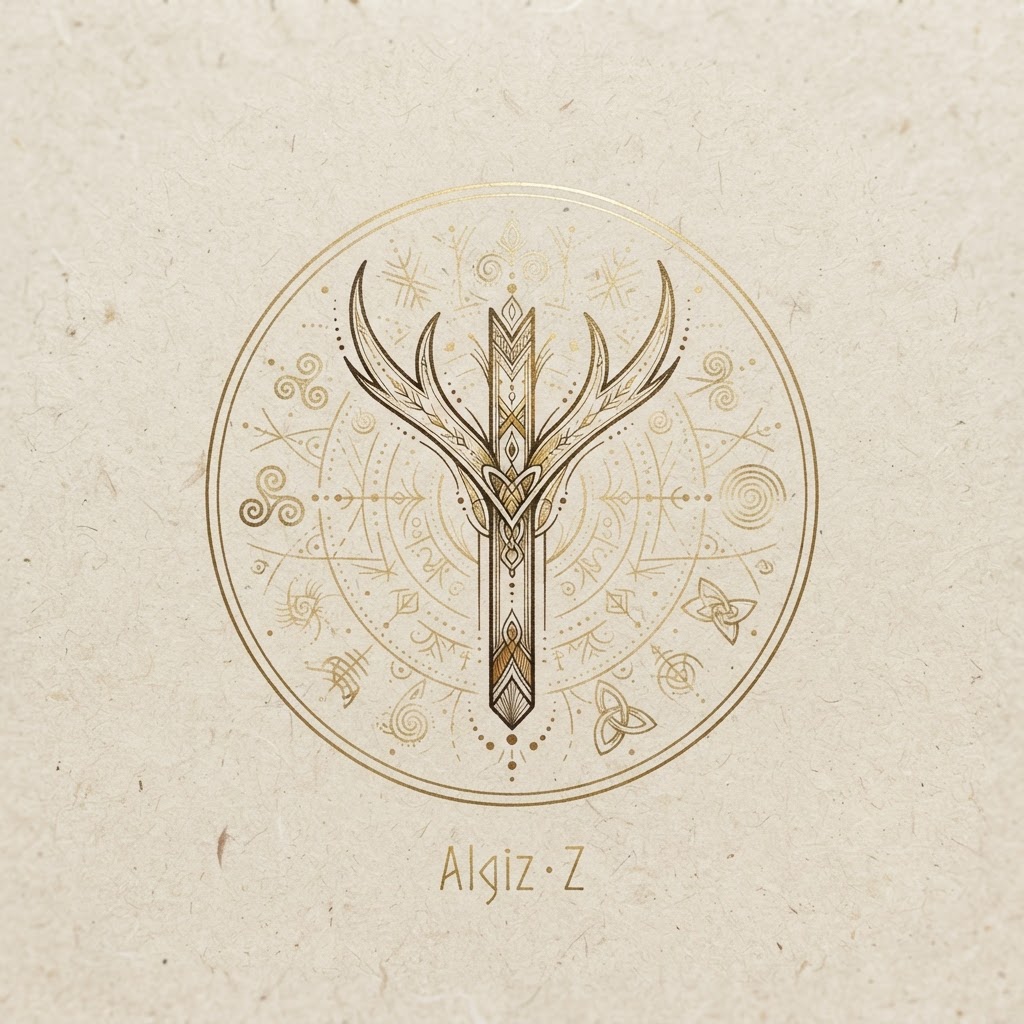
Algiz Rune: Meaning, Origin & Symbolism
Also known as: Elhaz, Eolh, Z-Rune
Protective Symbols
Germanic and Norse
Crown Chakra
Third Eye Chakra
Air
Protection
Wisdom
Transformation
An ancient Proto-Germanic Elder Futhark rune shaped like an elk's antlers, representing divine sanctuary, higher awareness, and instinctual protection.
Quick Facts
- Category
- Protective Symbols
- Culture / Origin
- Germanic and Norse
- Geographic Origin
- Northern and Central Europe
- Historical Period
- Iron Age through Migration Period
- Estimated Age
- circa 150 CE
- Element
- Air
- Planet
- Jupiter
- Chakra
- Crown, Third Eye
- Zodiac
- Sagittarius
- Deities
- Heimdall, Valkyries
- Verification
- unverified
What is Algiz Rune?
Algiz (historically reconstructed as Elhaz) is the fifteenth rune of the ancient 24-character Elder Futhark alphabet. Graphically resembling an upright stem with two diagonal branches rising like the antlers of an elk, or an individual standing with arms raised to the heavens in prayer, Algiz is universally acknowledged as the preeminent protective glyph in Germanic runic lore.
The historical Anglo-Saxon rune poem associates the glyph with the elk-sedge (a sharp marsh grass that wounds anyone attempting to seize it roughly), capturing the rune's character: a defense mechanism that turns an attacker's aggression back onto themselves. In Continental and Scandinavian traditions, it was simultaneously associated with the guardian Valkyries, bridge-wardens, and animal guides.
Carved on weapons, amulets, and boundary runestones, Algiz was called upon to create a perimeter of spiritual immunity. It does not merely build a static stone wall; rather, it activates instinctual warning systems, sharpening human perception so that danger is sensed and averted before it manifests.
Meaning of Algiz Rune
The Algiz rune represents active spiritual defense, sanctuary, divine intervention, and heightened intuitive awareness.
Origin & History
Algiz emerges in the earliest archaeological inscriptions of the Elder Futhark, found on artifacts like the Vimose comb in Denmark and the Kylver stone in Gotland. Inscriptions on lances, shields, and bracteates demonstrate that early Germanic warriors etched the symbol into battle gear to ensure divine favor and preserve life.
During the migration era, the rune was linked with the protective power of ancestral tutelary spirits (Fylgjur). The symbol was believed to anchor an energetic bridge between Midgard (the physical world) and Asgard (the divine plane), securing heavenly sanctuary for earthly travelers.
Spiritual Meaning
Algiz embodies the divine conduit linking humanity with transcendent cosmic consciousness. Raising the arms in the Algiz posture (stadhagaldr) mirrors the World Tree Yggdrasil, aligning the human spine as a central axis between earthly roots and celestial branches.
In terms of protective utility, Algiz awakens the subtle senses. It operates as an early spiritual radar, signaling intuitive alarm when deceit, spiritual parasites, or physical harm approach. It teaches that the greatest shield is awareness and right relationship with the sacred.
Symbolism
The central vertical trunk denotes the individual and the World Tree; the two uplifted side branches represent an elk's defensive antlers, the wings of a swan-valkyrie, or human hands reaching up in invocation.
Traditional Uses
Historically invoked by Germanic tribes as an apotropaic stave to ward against ambushes, sorcerous poisoning, and physical injury during martial warfare.
Modern Spiritual Uses
In contemporary runic practice and esoteric Northern traditions, Algiz is used as an auric shield, a meditation posture for channeling universal life force, and an anchor of safe sacred space.
Healing Associations
Nerve regulation, calming fight-or-flight overactivation, and soothing stress-induced paranoia.
Protection Associations
Defensive repulsion, warning of impending psychic or physical danger, shielding personal energy fields, and astral sanctuary.
How the Symbol Is Used
- •Runic Divination
- •Stadhagaldr (Runic Yoga)
- •Galdr Chanting
- •Talisman Carving
Cultural Context
Germanic and Norse — Northern and Central Europe (Iron Age through Migration Period)
Sources & References
- 1.Pollington, Stephen. Rudiments of Runelore. Anglo-Saxon Books, 1995.
- 2.Thorsson, Edred. Futhark: A Handbook of Rune Magic. Weiser Books, 1984.
This content is for educational and informational purposes only. Where modern spiritual interpretations are described, they are not presented as ancient historical facts. It is not a substitute for professional medical or spiritual advice.