Alchemical Sulfur: Meaning, Origin & Symbolism
Also known as: Sulphur of the Philosophers, Active Principle, Soul of the World, Anima Mundi
Hermetic
European / Islamic Alchemy
Solar Plexus Chakra
Sacral Chakra
Fire
Transformation
Willpower
Wisdom
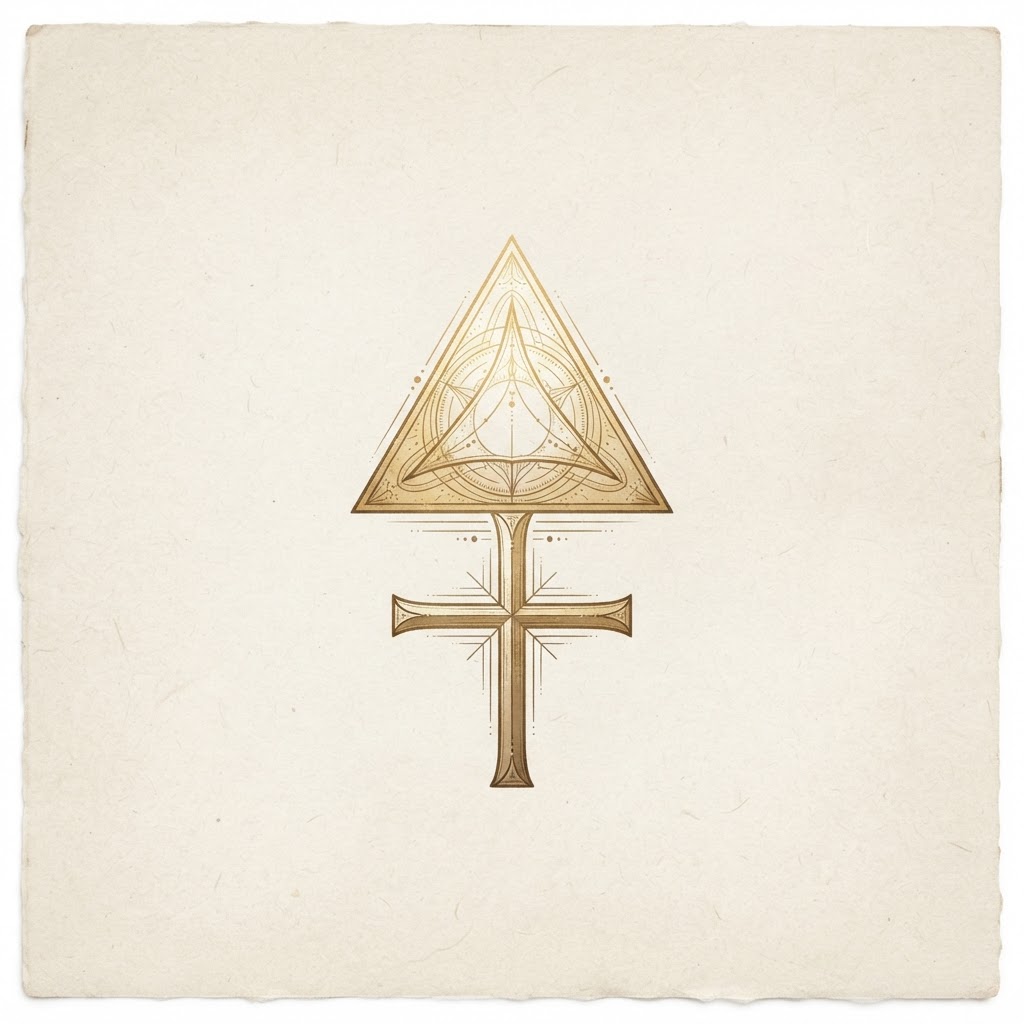
A triangle atop a cross, symbolizing the active, fiery, and solar masculine soul within the Hermetic Tria Prima.
Quick Facts
- Category
- Hermetic
- Culture / Origin
- European / Islamic Alchemy
- Geographic Origin
- Middle East and Europe
- Historical Period
- Medieval to Early Modern
- Estimated Age
- circa 800 CE
- Element
- Fire
- Planet
- Sun
- Chakra
- Solar Plexus, Sacral
- Zodiac
- Aries, Leo
- Deities
- Vulcan, Hephaestus, Agni
- Verification
- unverified
What is Alchemical Sulfur?
In Hermetic alchemy, Sulfur is one of the three foundational components of nature known as the Tria Prima (Three Primes), alongside Salt and Mercury. Far from referring solely to the chemical element brimstone, philosophical Sulfur embodies the fiery, masculine, conscious soul of matter. Its classical glyph is composed of an upward-pointing equilateral triangle—the universal glyph for the element of Fire—balanced directly atop a Greek cross, which represents the four material elements and physical manifestation.
The symbol encapsulates the presence of divine, vital warmth permeating and animating the dense physical world. In the laboratory and inner spiritual work, Sulfur is the animating spark, the combustible and active agent that causes changes of state, drives evolution, and infuses cold, inert matter with vitality, consciousness, and form.
Meaning of Alchemical Sulfur
Alchemical Sulfur signifies the active, solar soul, passion, and energetic willpower driving the transmutation of life.
Origin & History
The theoretical foundations of the Sulfur-Mercury theory of metals were laid by the 8th-century Persian alchemist Jabir ibn Hayyan (Geber). He argued that all metals were formed beneath the earth through different proportions of subtle sulfur (fiery, hot, dry) and subtle mercury (watery, cold, moist).
In the early 16th century, the Swiss physician and occult philosopher Paracelsus expanded this dual model into the Tria Prima by introducing Salt, creating a complete tripartite metaphysical system that mirrored the Christian Trinity: Sulfur (Soul), Mercury (Spirit), and Salt (Body). The visual glyph of the triangle over the cross was codified during this era, becoming an indispensable shorthand across alchemical manuscripts for the active, creative impulse inherent in nature.
Spiritual Meaning
On a spiritual path, Sulfur represents the personal soul (the Anima), the seat of desires, individual identity, and spiritual will. While base sulfur can manifest as blinding rage, unbridled passions, and destructive ego-fixations, purified or 'philosophic' sulfur becomes the clear, focused spiritual fire that illuminates the soul's divine purpose.
Transmuting inner Sulfur involves purifying base drives through spiritual discipline so they no longer burn destructively, but instead warm and energize the vessel. It teaches the initiate that the passions are not to be crushed, but refined, harnessable as the vital fuel necessary to complete the Great Work of self-realization.
Symbolism
The upward-pointing triangle represents the element Fire, aspiration, and celestial light; the cross beneath represents the material plane, the four elements, and the grounding of divine energy into form.
Traditional Uses
Within the Paracelsian Tria Prima, it represents the principle of combustibility, the soul of matter, and the unyielding inner fire that holds physical forms together.
Modern Spiritual Uses
Interpreted by modern occultists and transpersonal thinkers as an emblem of authentic passion, personal agency, and the fire of creative drive.
Healing Associations
Associated with restoring physical vitality, clearing lethargy, and stimulating the digestive and metabolic fires.
How the Symbol Is Used
- •Spiritual Alchemy
- •Laboratory Spagyrics
- •Hermetic Philosophy
- •Occult Meditation
Cultural Context
European / Islamic Alchemy — Middle East and Europe (Medieval to Early Modern)
Sources & References
- 1.The Archidoxes of Magic by Paracelsus
- 2.The Summa Perfectionis of Pseudo-Geber
- 3.Alchemical Studies by C.G. Jung
This content is for educational and informational purposes only. Where modern spiritual interpretations are described, they are not presented as ancient historical facts. It is not a substitute for professional medical or spiritual advice.