Alchemical Salt: Meaning, Origin & Symbolism
Also known as: Sal of the Philosophers, The Principle of Fixation, Corpus, The Material Body
Hermetic
European Hermeticism
Root Chakra
Earth
Protection
Balance
Grounding
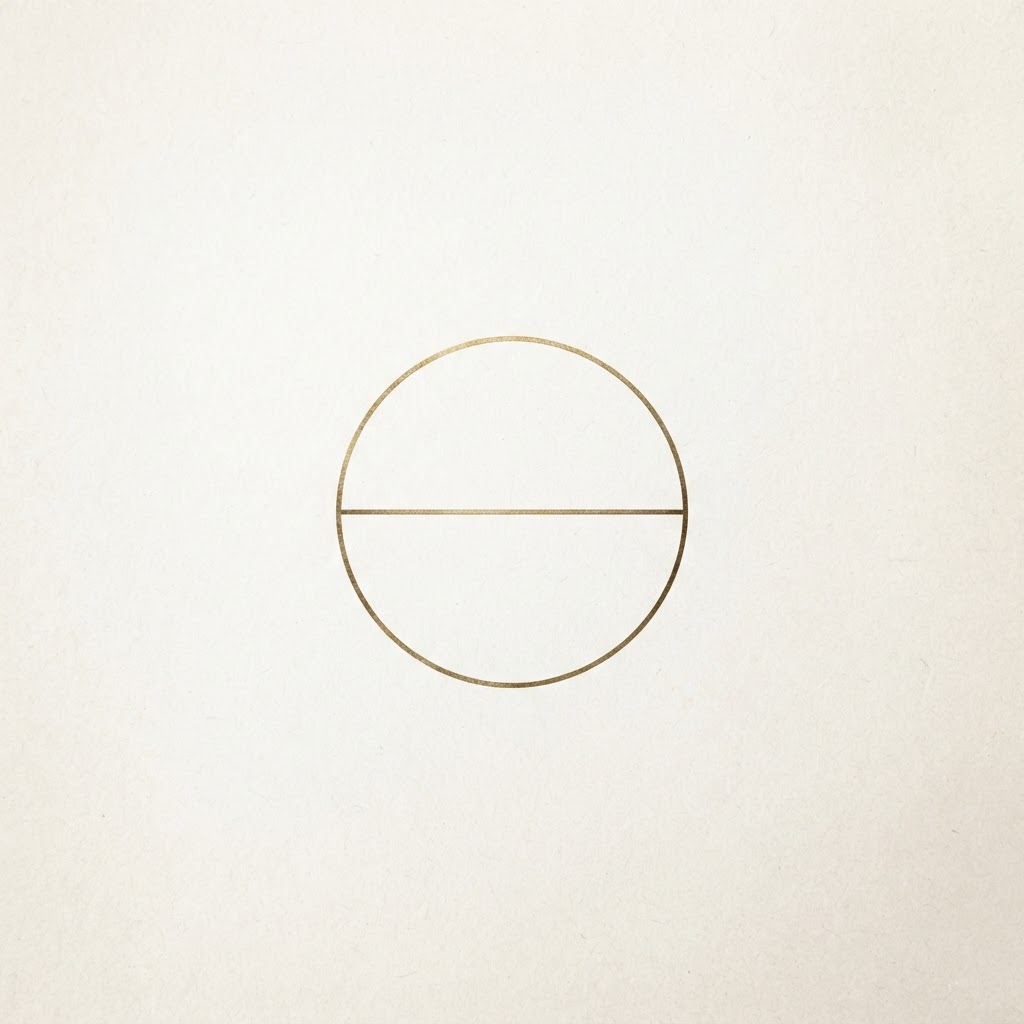
A circle bisected horizontally by a single line, representing the grounded, physical body and the principle of crystallization.
Quick Facts
- Category
- Hermetic
- Culture / Origin
- European Hermeticism
- Geographic Origin
- Europe
- Historical Period
- Renaissance
- Estimated Age
- circa 1500 CE
- Element
- Earth
- Planet
- Saturn
- Chakra
- Root
- Zodiac
- Taurus, Capricorn
- Deities
- Demeter, Prithvi, Saturn
- Verification
- unverified
What is Alchemical Salt?
Alchemical Salt is the stabilizing third member of the Paracelsian Tria Prima, serving as the physical container for the energetic interplay of Sulfur (Soul) and Mercury (Spirit). Its symbol is deceptively minimalist: a perfect circle horizontally bisected by a straight diameter line. This glyph portrays the division between spiritual light and material density, illustrating how celestial forces become anchored, crystallized, and stabilized into palpable matter.
In Hermetic thought, Salt is the principle of fixation, solidity, memory, and endurance. Without Salt, the fires of Sulfur would dissipate instantly, and the fluids of Mercury would evaporate into nothingness. Salt provides the enduring physical vehicle—the vessel—within which spiritual evolution and personal self-realization can safely transpire.
Meaning of Alchemical Salt
Alchemical Salt signifies the material body, crystallization, physical stability, and the fixed manifestation of divine consciousness.
Origin & History
While early medieval alchemy relied largely on the two-principle theory (Sulfur and Mercury) inherited from the Islamic golden age, Paracelsus systematically introduced Salt as the necessary third pillar of existence. He posited that when any substance burns, the flame is Sulfur, the smoke is Mercury, and the remaining ash is Salt.
This revolutionary ternary approach unified alchemical philosophy with biology, medicine, and Christian theology. The horizontal line bisecting the circle was adopted universally in 16th and 17th-century European alchemical grimoires and pharmacopeias as the explicit sigil for the ground state of matter, chemical ashes, and the immortal crystal body.
Spiritual Meaning
On the spiritual path, Salt represents the physical body and personal memory. It is the sanctified temple without which the soul cannot incarnate or undergo initiation in this reality. While unrefined Salt can symbolize mental calcification, dogmatism, and material obsession, purified Salt is the enduring spiritual body—the immortalized vessel capable of enduring divine fire without consuming itself.
Contemplating Salt teaches the seeker reverence for the material plane. It warns against ungrounded mysticism that attempts to ignore physical health and daily obligations, reminding the practitioner that true enlightenment requires rooting celestial wisdom deeply into mundane, physical action.
Symbolism
The outer circle represents universal eternity and the cosmos; the horizontal dividing line represents the horizon of manifestation, grounding, and the separation of celestial from terrestrial matter.
Traditional Uses
Identified as the principle of solidity, earth, and incombustibility that preserves forms and serves as the vehicle for life in Paracelsian medicine.
Modern Spiritual Uses
Understood in modern somatic spirituality as the wisdom of the physical body, nervous system stabilization, and the vital importance of grounding ethereal insights into concrete reality.
Healing Associations
Connected to structural integrity, bone health, tissue regeneration, and recovering from disassociated mental conditions through physical embodiment.
Protection Associations
Historically utilized across folk and ceremonial traditions as an incorruptible barrier against negative energetic influences and psychic contamination.
How the Symbol Is Used
- •Spagyric Medicine
- •Spiritual Alchemy
- •Somatic Grounding
- •Occult Rituals
Cultural Context
European Hermeticism — Europe (Renaissance)
Sources & References
- 1.Opus Paramirum by Paracelsus
- 2.The Alchemical Body by David Gordon White
- 3.The Hermetic Museum by Arthur Edward Waite
This content is for educational and informational purposes only. Where modern spiritual interpretations are described, they are not presented as ancient historical facts. It is not a substitute for professional medical or spiritual advice.