Plant MedicineSassafras
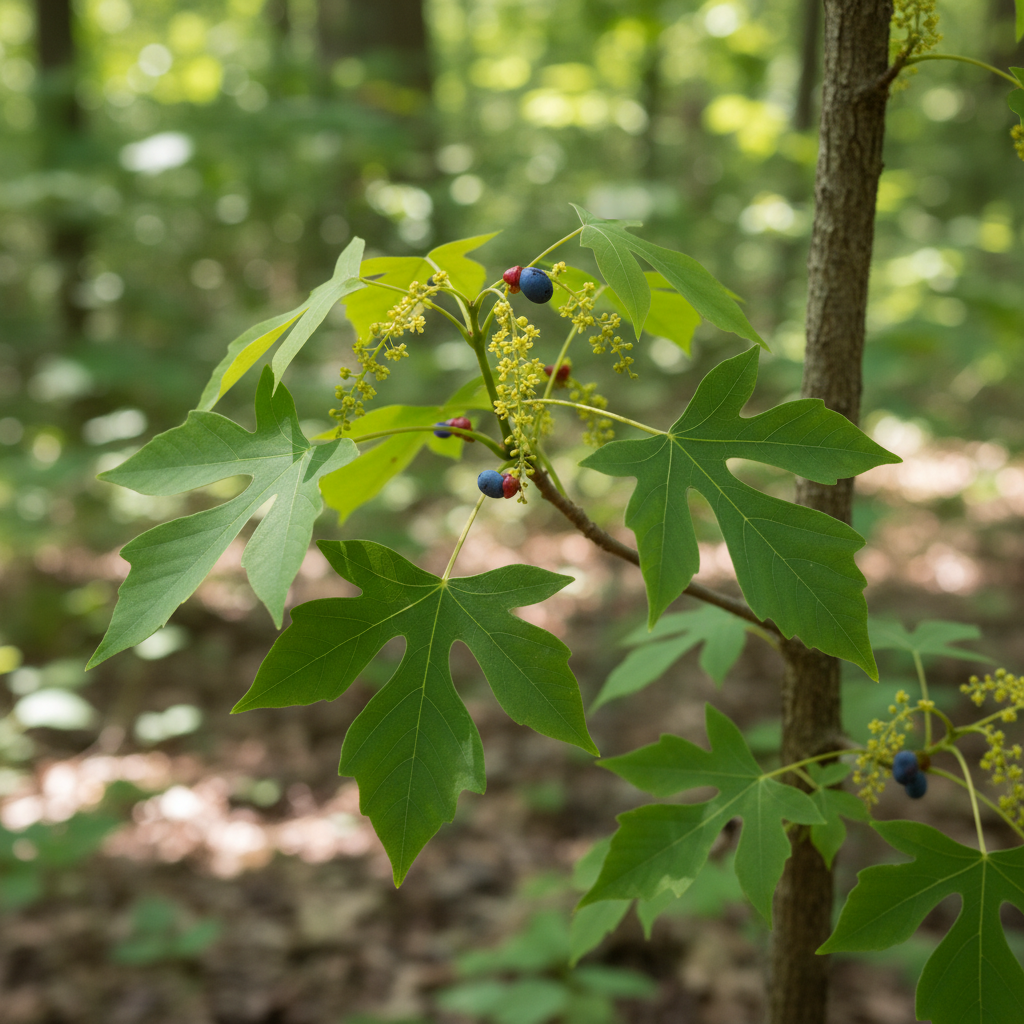
Sassafras
Sassafras albidum
Family: Lauraceae
Also known as: White sassafras, Red sassafras, Silky sassafras
At a glance
Best for: Traditional root beer flavoring, Historical folk medicine use
Parts used: Root bark, Leaves, Bark
Common forms: Tea, Extract, Essential oil, Powder
Evidence level: Traditional-only/Early
Cautions: Safrole is carcinogenic; Banned for food use in many countries; Not recommended for internal use
What it is
Sassafras (Sassafras albidum) is a deciduous tree native to eastern North America. It has distinctive mitten-shaped leaves and aromatic bark. The root bark was traditionally the main flavoring for root beer until safrole was identified as a health concern.
Traditional use
Native Americans used sassafras for various purposes: as a spring tonic, for skin conditions, and to flavor foods. Early European settlers adopted it as a tea and folk remedy for blood purification, rheumatism, and skin ailments. It was also the original flavoring for root beer.
What modern research suggests (Traditional-only/Early)
Research in the 1960s-70s identified safrole as hepatotoxic and carcinogenic in animal studies. This led to FDA bans on safrole in food products. Modern root beer uses artificial or safrole-free sassafras extracts. Limited evidence supports any medicinal use.
How people use it
Historically used as a tea from root bark or leaves. Today, safrole-free extracts may be used for flavoring. Essential oil (containing safrole) is sometimes used externally in aromatherapy, though this is not recommended.
Safety + interactions
IMPORTANT: Safrole is classified as a probable human carcinogen and hepatotoxin. Internal use of sassafras containing safrole is not recommended. Banned for food use in the US and many other countries. May interact with blood thinners and sedatives. Pregnant and nursing women should avoid.
May interact with: Blood thinners, Sedatives
Name clarity note
Sassafras tea was once popular but safrole-containing products are now banned in many countries due to cancer concerns.
Community Insights
Premium members share their experiences and knowledge about this plant.
Disclaimer: This content is educational and not medical advice. Always consult a qualified healthcare provider before using any herbs or supplements, especially if you are pregnant, nursing, taking medications, or have a medical condition.