Plant MedicineDulse
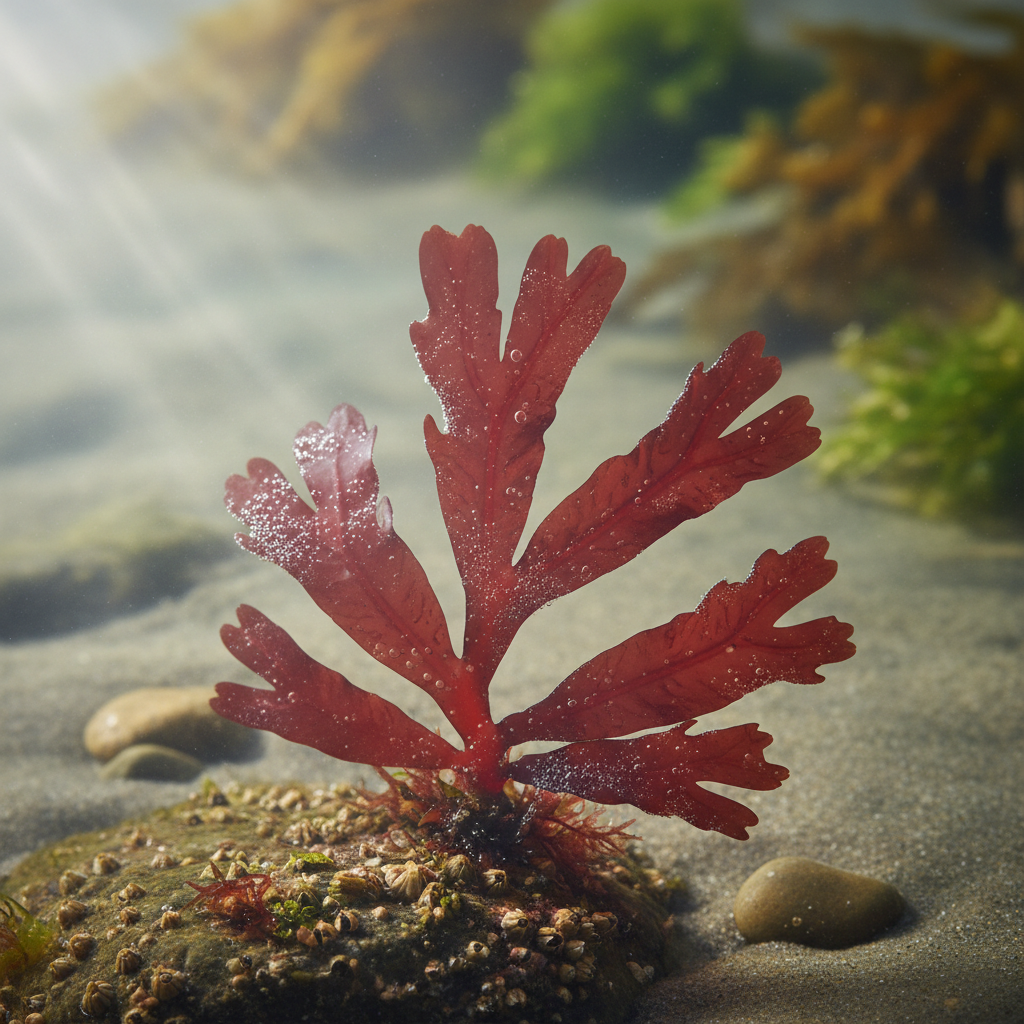
Dulse
Palmaria palmata
Family: Palmariaceae
At a glance
Best for: Minerals, Iodine (moderate), Protein
Parts used: Whole fronds
Common forms: Dried flakes, Powder, Fresh
Evidence level: Traditional-only/Early
Cautions: May contain heavy metals—test products
What it is
Dulse is a red seaweed with a soft, chewy texture and slightly salty flavor. It can be eaten raw or cooked.
Traditional use
Eaten for centuries in Iceland, Ireland, and coastal Canada as a food and mineral source.
What modern research suggests (Traditional-only/Early)
Limited research. Nutritionally rich in minerals, iodine (less than kelp), protein, and fiber. Traditional food source.
How people use it
Dried flakes sprinkled on food, added to soups, or eaten as snack. Powder in smoothies. Fresh if available.
Safety + interactions
Generally safe as food. Lower in iodine than kelp but still significant—use moderately. Test for heavy metals. Monitor if on thyroid meds.
May interact with: Thyroid medications, Blood thinners
Quality notes
Test for heavy metals and arsenic. Traditionally wild-harvested from clean waters.
FAQs
Is it safer than kelp for iodine?
Dulse has less iodine than kelp but still significant amounts. More moderate for food use.
What does it taste like?
Slightly salty, umami, ocean flavor. Some say it tastes bacon-like when fried.
Community Insights
Premium members share their experiences and knowledge about this plant.
Disclaimer: This content is educational and not medical advice. Always consult a qualified healthcare provider before using any herbs or supplements, especially if you are pregnant, nursing, taking medications, or have a medical condition.