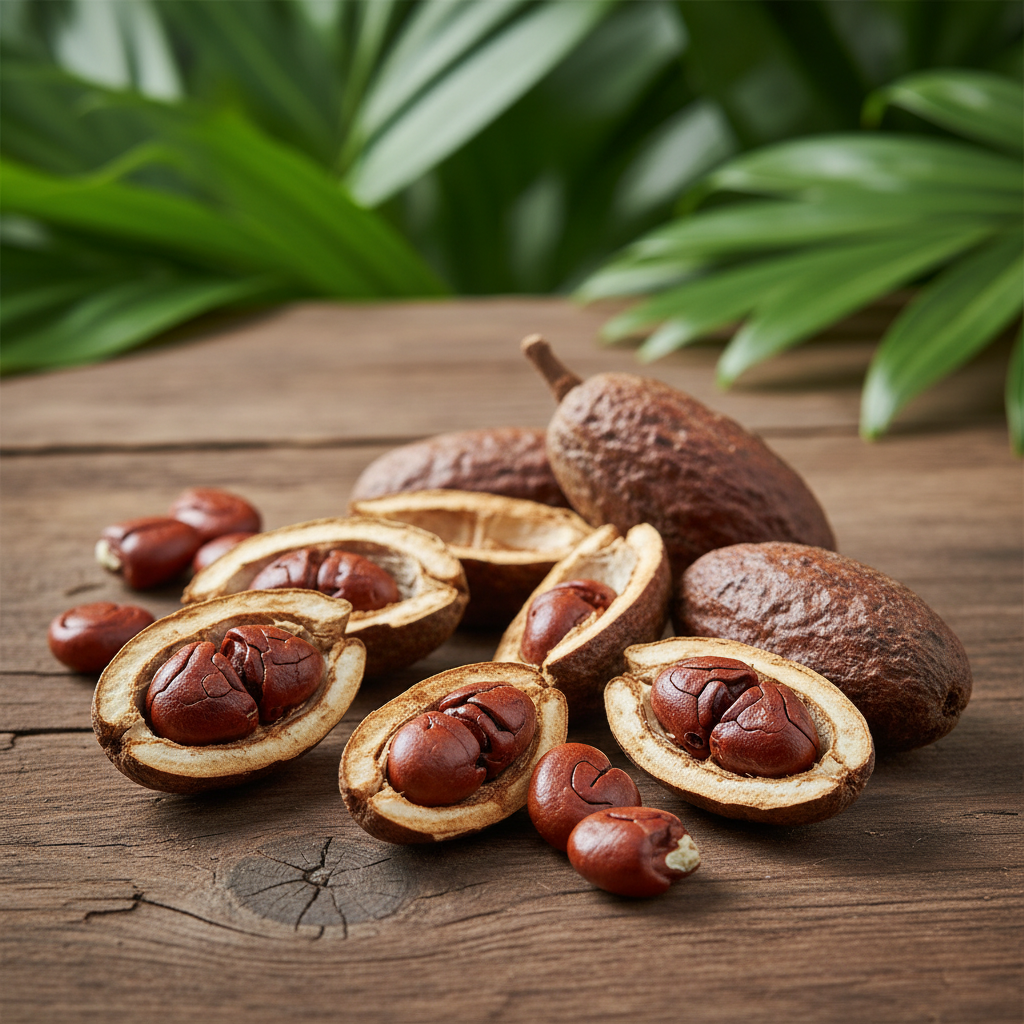
Cola Nut
Cola nitida
Family: Malvaceae (formerly Sterculiaceae)
Also known as: Kola Nut, Bitter Kola, Guru Nut, Bissy Nut, African Kola
At a glance
What it is
The nut is rich in caffeine (1.5–3.5%), theobromine, kolatein, tannins, flavonoids, and saponins. These compounds together give kola nut its stimulant, digestive, and potential medicinal properties.
Historically, kola nuts hold immense cultural significance in West Africa — particularly among the Yoruba, Igbo, and Hausa peoples — where they are offered at weddings, funerals, naming ceremonies, and diplomatic meetings. They were also a key original ingredient in Coca-Cola.
Traditional use
• Combat fatigue and boost stamina during long work or travel
• Suppress hunger during fasting or food scarcity
• Ease digestive complaints including nausea, bloating, and morning sickness
• Treat headaches and migraines
• Aid breathing and support respiratory conditions
• Serve as a social and ceremonial offering — sharing kola nut is a gesture of respect and hospitality
In Jamaican folk medicine, 'bissy tea' (kola nut tea) is used as a remedy for food poisoning, upset stomach, and as a general tonic. Traditional African herbalists have also used the bark and leaves medicinally.
What modern research suggests (Promising)
• **Stimulant effects**: Well established. The combination of caffeine and theobromine provides synergistic cognitive and physical energy benefits with a smoother effect than caffeine alone.
• **Antimicrobial**: Studies show extracts inhibit growth of bacteria including Staphylococcus aureus and Streptococcus pyogenes.
• **Diuretic**: Animal studies confirm a dose-dependent diuretic effect, supporting its traditional use for fluid retention.
• **Antioxidant**: Flavonoid and phenolic content demonstrates free-radical scavenging activity.
• **Metabolism**: Some evidence suggests kola nut may enhance metabolic rate and support weight management.
• **Anti-inflammatory**: Preliminary studies show anti-inflammatory activity, though human trials are lacking.
The evidence level is promising, but most studies are in vitro or animal-based. More robust human clinical trials are needed.
How people use it
**Kola nut tea (Bissy tea)**: Grate or powder the dried nut and steep in hot water for 10–15 minutes. Often taken with ginger or honey.
**Capsules or powder**: 250–500mg standardised extract, 1–2 times daily. Follow product instructions.
**Tincture**: 1–2ml in water, up to twice daily.
**Timing**: Best taken in the morning or early afternoon due to caffeine content. Avoid within 6 hours of sleep.
Safety + interactions
**Avoid or use caution if you:**
• Are sensitive to caffeine
• Have high blood pressure, heart disease, or anxiety disorder
• Are pregnant (moderate amounts may be okay but large doses should be avoided)
• Have a bleeding disorder or are taking blood thinners
• Take MAO inhibitors
**Side effects** from excessive use: insomnia, nervousness, restlessness, rapid heart rate, elevated blood pressure, nausea.
**Long-term heavy chewing** of kola nut has been associated in some epidemiological studies with increased oral cancer risk, though causality is not established.
The caffeine content means all typical caffeine cautions apply.
May interact with: Caffeine-sensitive medications, MAOIs, Blood pressure medications, Blood thinners, Stimulant medications
Name clarity note
Cola nut (Cola nitida) is sometimes confused with Garcinia kola, commonly called 'Bitter Kola' — a different species with different properties. Also distinct from the cola flavouring used in soft drinks, though historically related.
Quality notes
Look for whole dried nuts or standardised extracts. Chewing the raw nut is the most traditional and bioavailable method. Caffeine content varies significantly between products.
FAQs
What does kola nut taste like?
Fresh kola nut is quite bitter, with a slightly astringent, earthy flavour. The bitterness softens as you chew. Dried or powdered kola nut in tea or capsule form is less intense.
How much caffeine is in kola nut?
Cola nut contains approximately 1.5–3.5% caffeine by weight. A typical 250mg capsule would contain roughly 4–9mg of caffeine — significantly less than a cup of coffee (80–120mg).
Is kola nut the same as what's in Coca-Cola?
Historically, yes. The original Coca-Cola formula included kola nut extract for its caffeine and flavour. Modern Coca-Cola uses synthetic caffeine, but the name 'Cola' is derived from the plant.
Can I take kola nut every day?
Short-term daily use (up to 12 weeks) appears to be safe for most healthy adults. Long-term heavy use — particularly chewing large amounts of raw nut — is not recommended due to potential risks.
Is kola nut safe during pregnancy?
Occasional use may be acceptable, but large amounts should be avoided during pregnancy. Consult your healthcare provider before use.
Community Insights
Premium members share their experiences and knowledge about this plant.
Disclaimer: This content is educational and not medical advice. Always consult a qualified healthcare provider before using any herbs or supplements, especially if you are pregnant, nursing, taking medications, or have a medical condition.