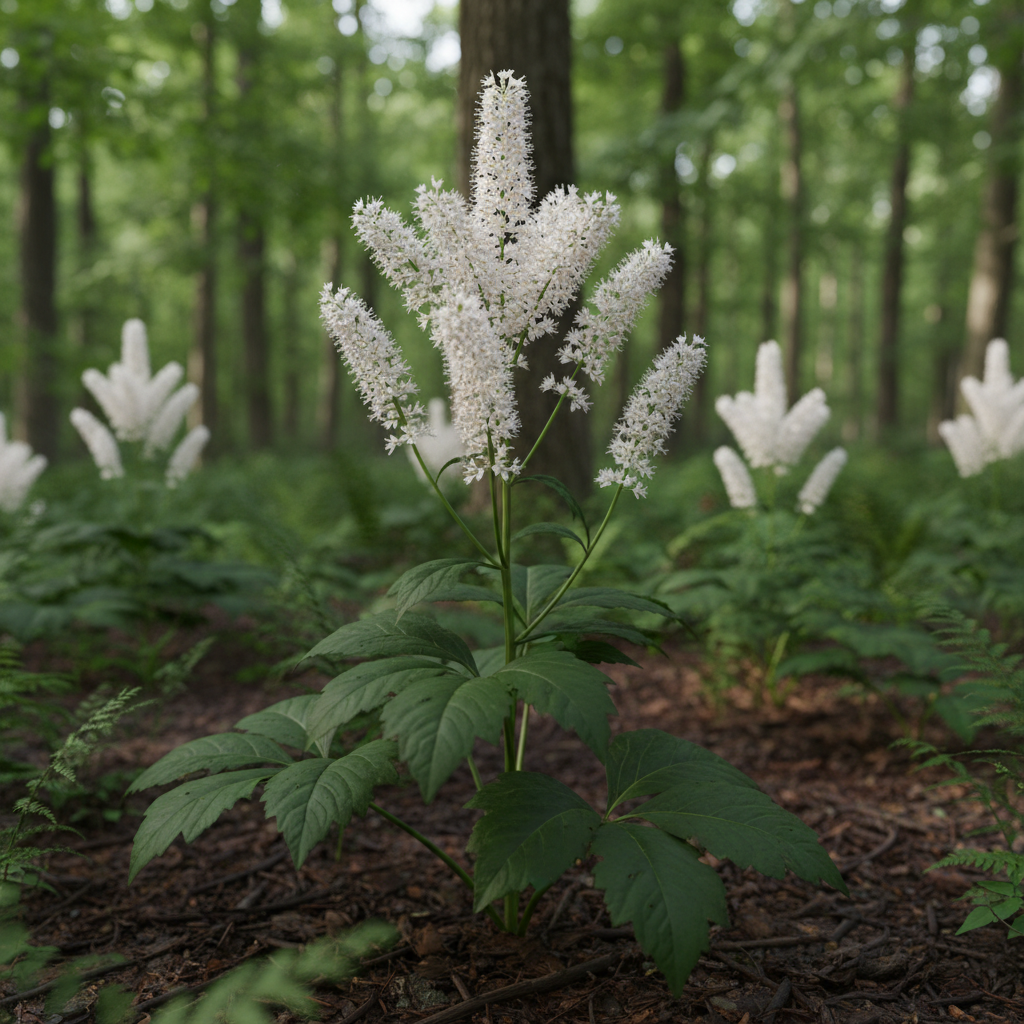
Black Cohosh
Actaea racemosa
Family: Ranunculaceae
Also known as: Cimicifuga, Bugbane
At a glance
What it is
Traditional use
What modern research suggests (Promising)
How people use it
Safety + interactions
May interact with: Hormone medications
Name clarity note
Scientific name changed from Cimicifuga racemosa to Actaea racemosa.
Quality notes
Standardized extracts used in research. Quality matters—look for third-party testing.
FAQs
Is it a phytoestrogen?
Despite traditional use for 'female issues,' black cohosh does not appear to be significantly estrogenic.
How long can I take it?
Studies support use up to 6-12 months. Long-term safety beyond that is less clear.
Community Insights
Premium members share their experiences and knowledge about this plant.
Disclaimer: This content is educational and not medical advice. Always consult a qualified healthcare provider before using any herbs or supplements, especially if you are pregnant, nursing, taking medications, or have a medical condition.